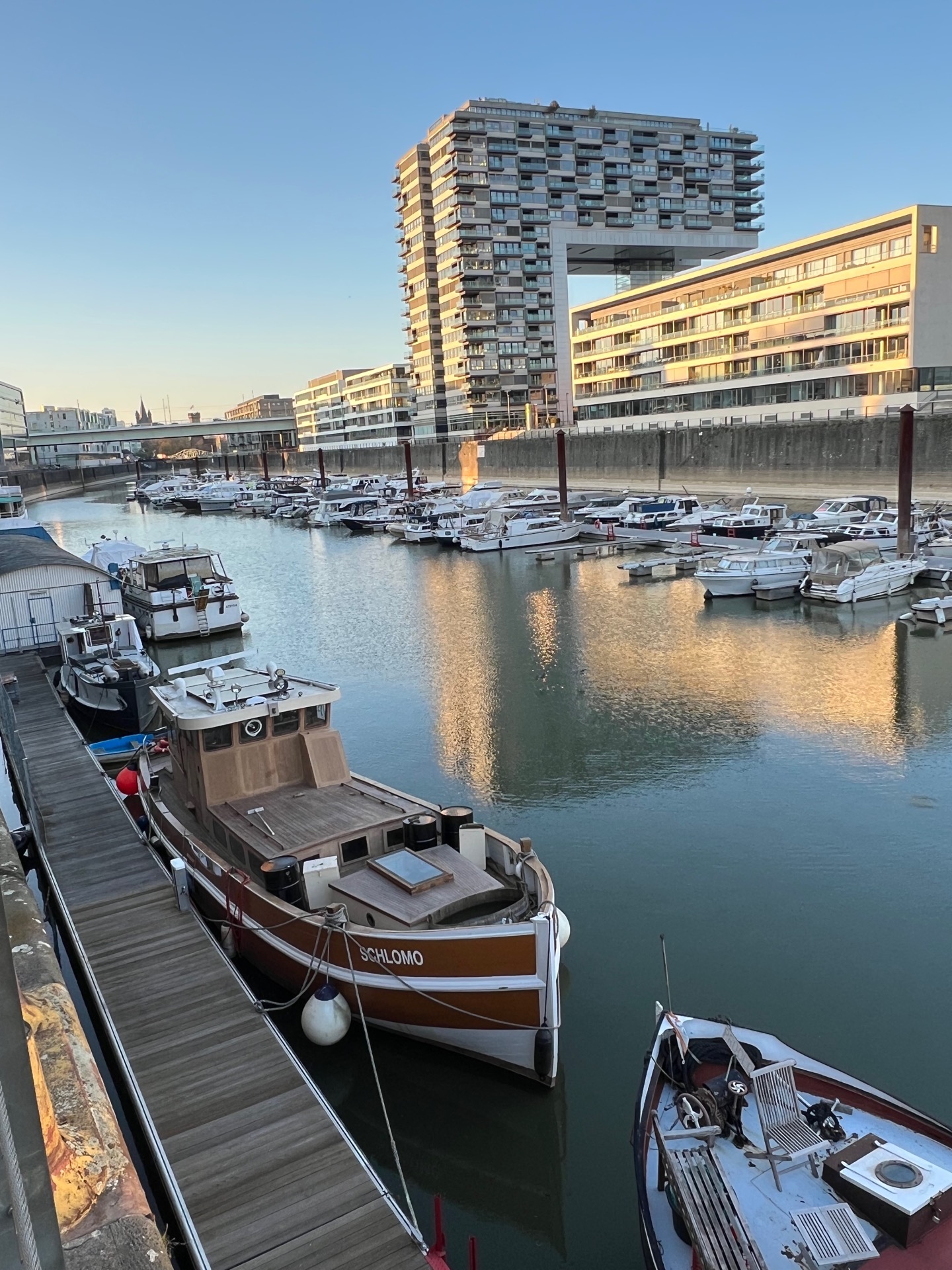
Origin — Seventy Years of Honest Service
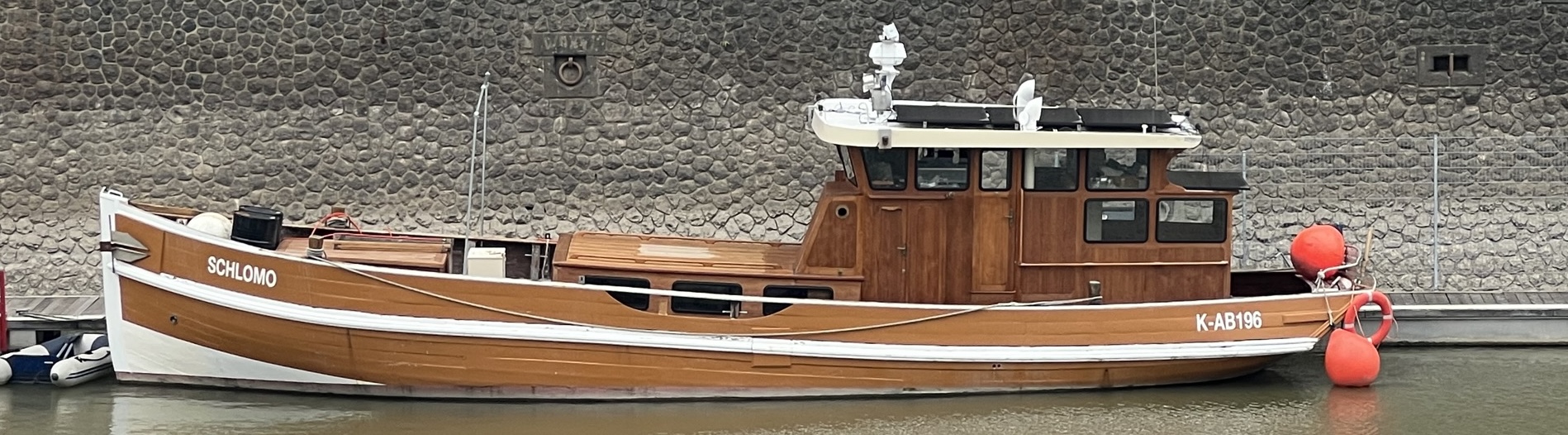
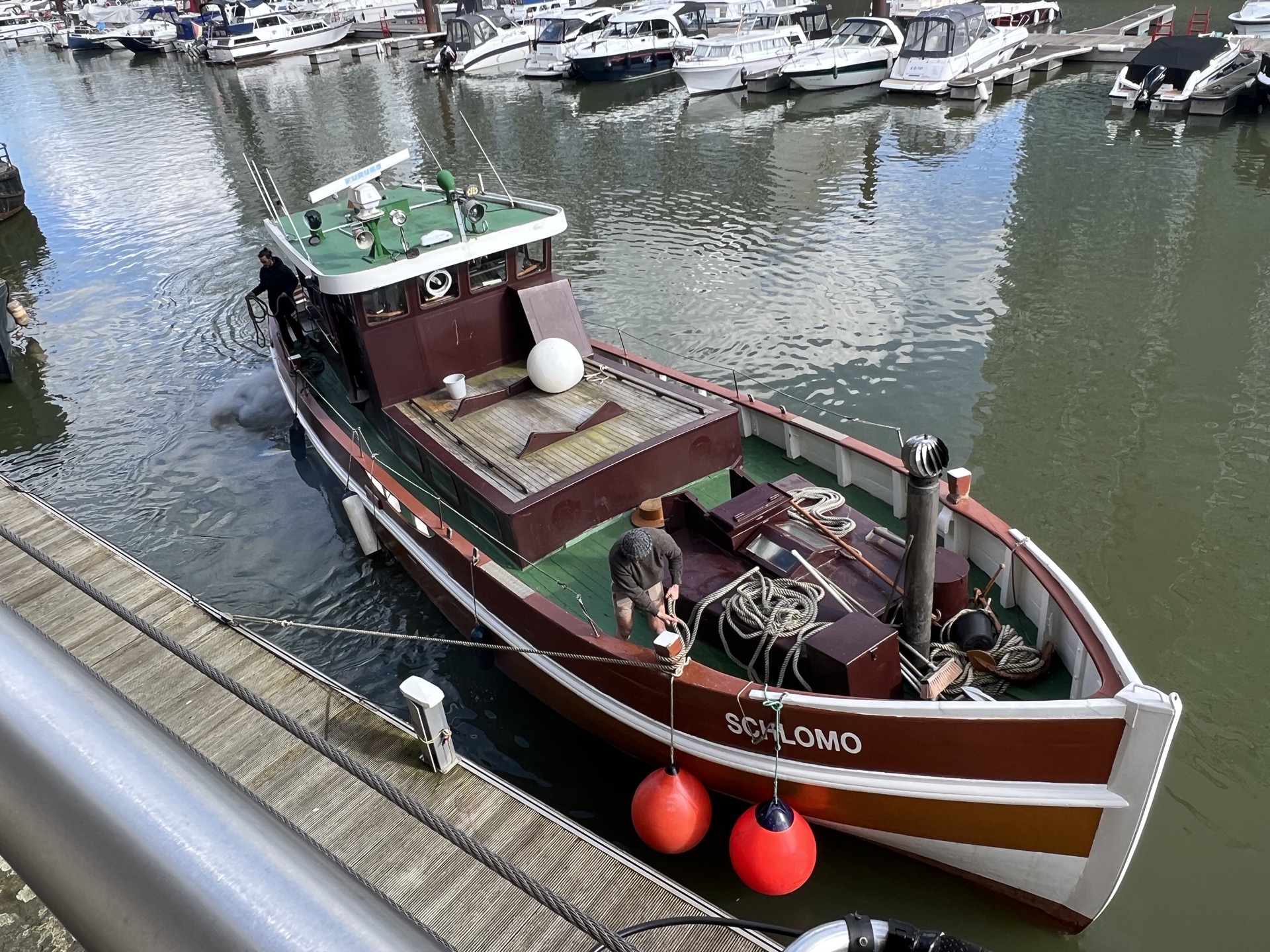
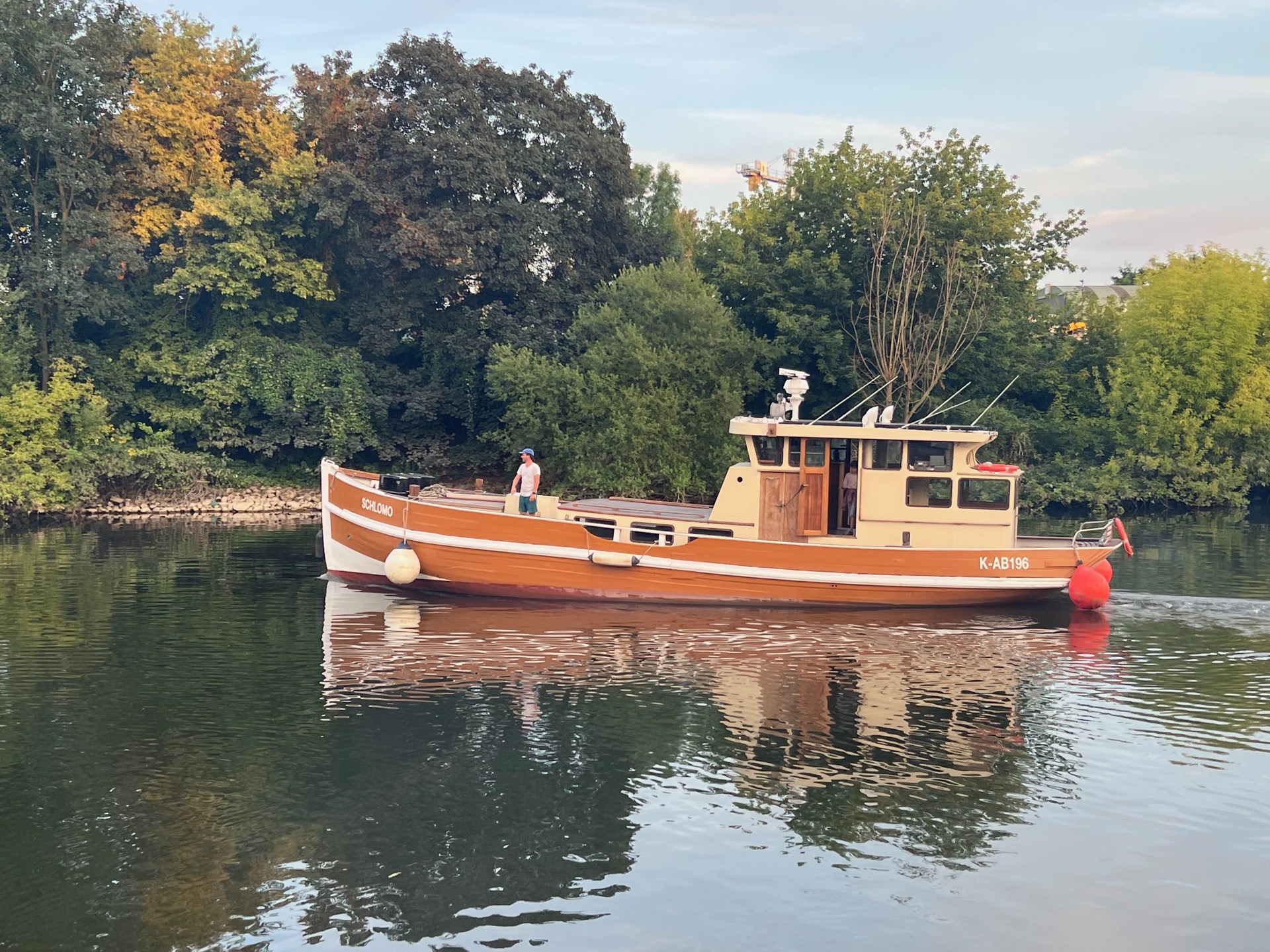
Schlomo was built in 1952 at Schlömer Werft in Oldersum, East Frisia — a yard known for working craft built to last. She is carvel-planked oak over transverse frames, 16.00 metres in length, 4.20 metres in beam, drawing 1.60 metres of water. For the first two decades of her life she worked as a government survey vessel; in the 1970s she was taken to H. Bültjer Bootswerft in Ditzum on the Ems and converted for extended service under the NLWKN — the Lower Saxon authority for water management, coastal protection, and nature conservation. Fitted with a MAN 6-cylinder marine diesel (MAN D2156 HM, 180 PS, built 1972) driving a fixed propeller through a Reintjes gearbox, she continued to work the North Sea tidal flats as a sounding and survey vessel until 2022.
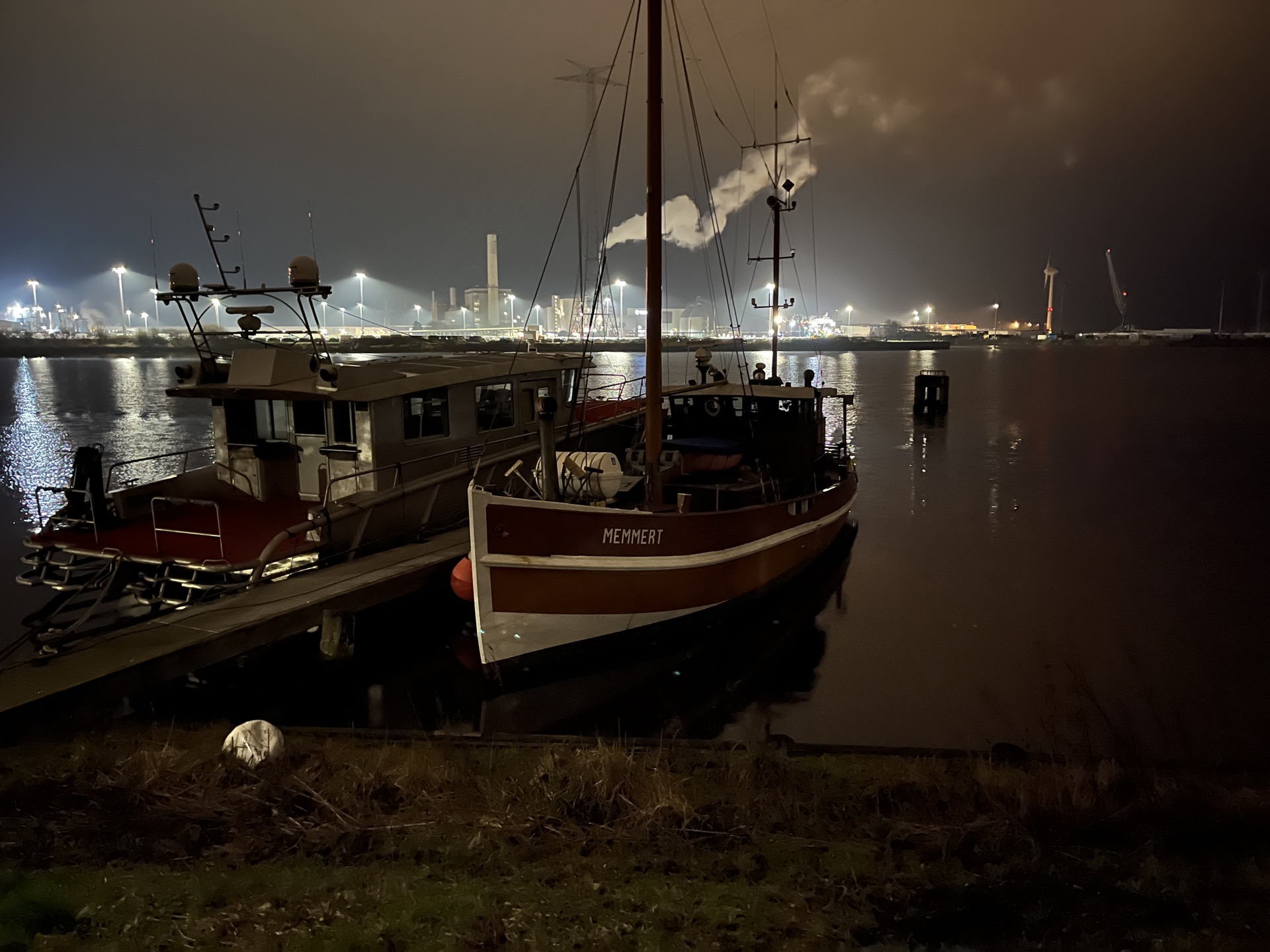
In January 2023 she was decommissioned and offered at federal surplus auction via VEBEG. She was acquired by Vague Ventures at that auction. The name she came with could not be carried over — so she became Schlomo.
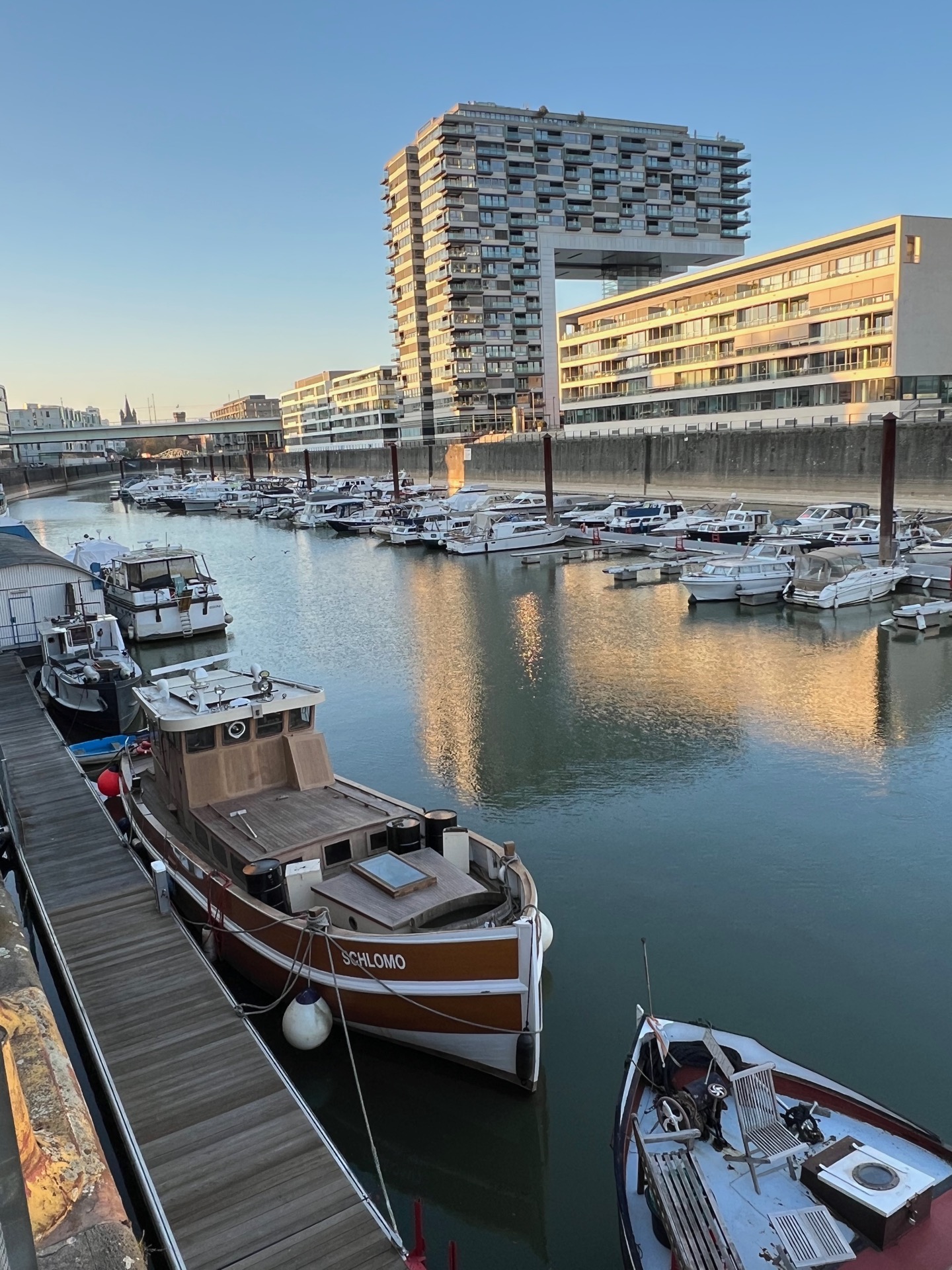
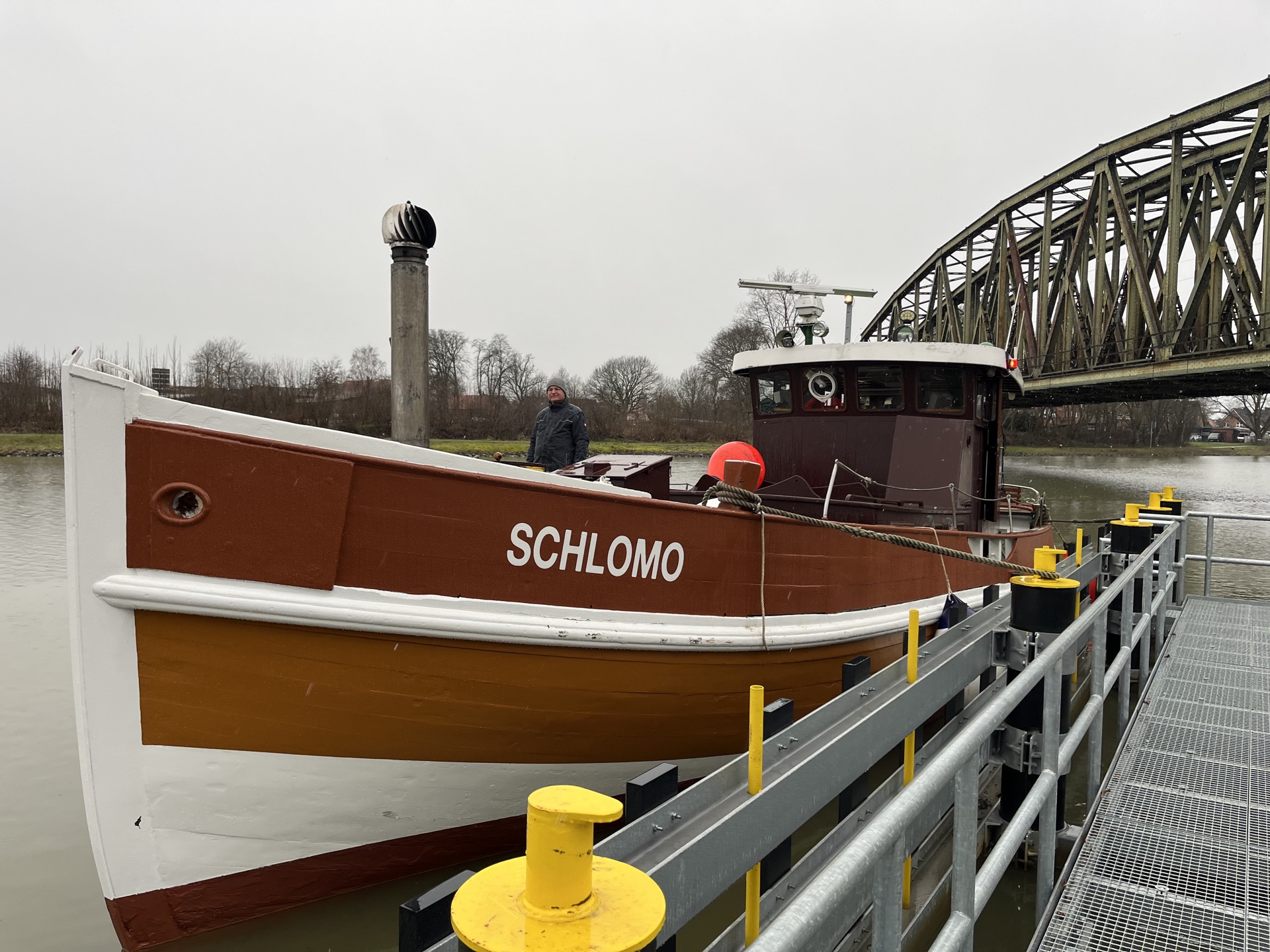
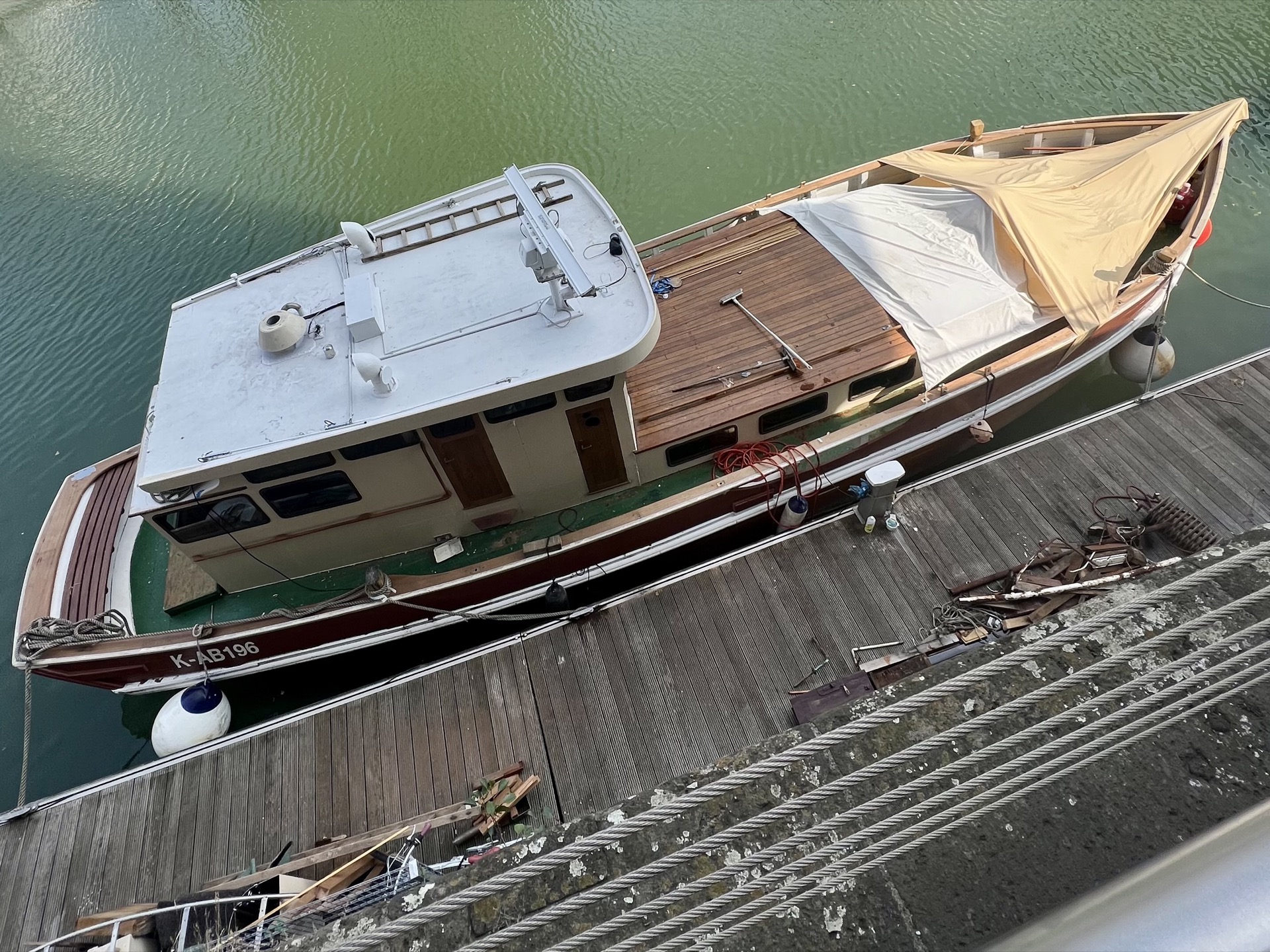
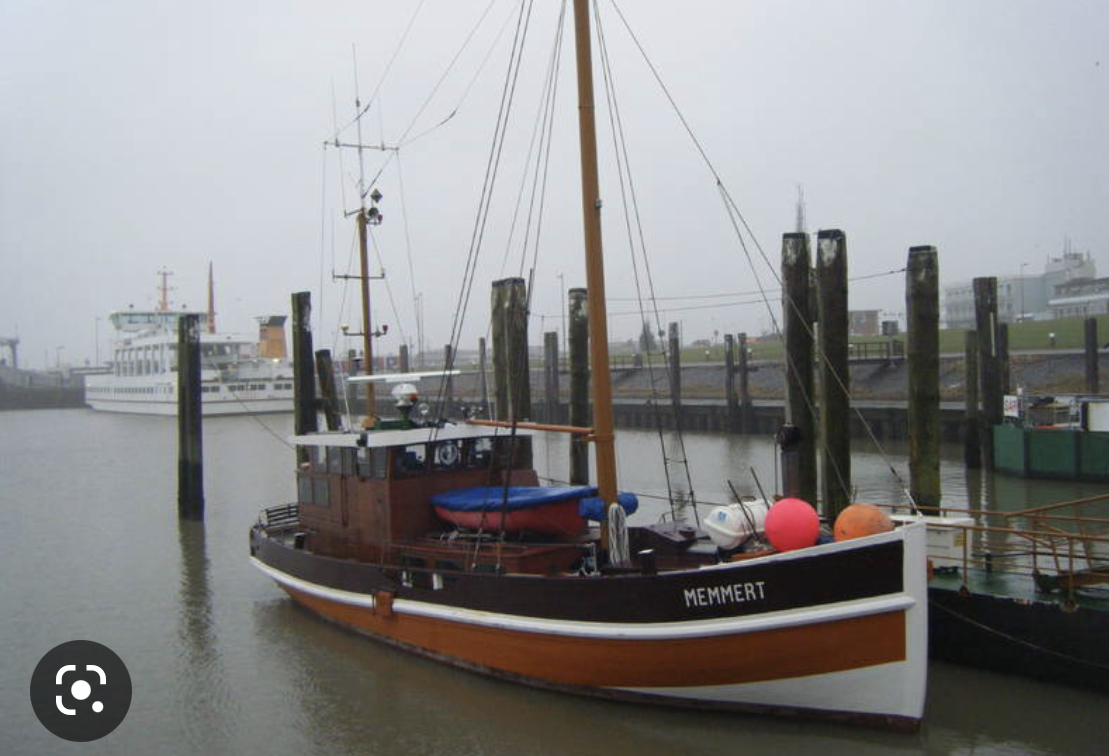
Schlomo (then still known as Memmert) in the harbour at Emden, at the time of acquisition — January 2023
Assessment — What the Documents Confirmed
Before any restoration work began, the vessel was subject to a rigorous independent structural survey. The hull, engine, deck, and interior were each assessed by Andreas Krause — a Bootsbaumeister and certified naval surveyor recognised by the Verband für Sportboot- und Schiffbau Sachverständige e.V. (VBS) within the Verband Maritime Wirtschaft Deutschland.
A full market comparison was conducted across six comparable historic timber vessels — including similar Dawartz and Bültjer-built cutters ranging from €49,000 to €399,000. The independent appraisal (reference G26-284, dated 14 January 2026) placed the vessel's replacement value at €166,265.67, grounded in documented restoration investment of €137,157.81 and verified purchase cost of €24,990. The complete appraisal is provided to all serious enquirers.
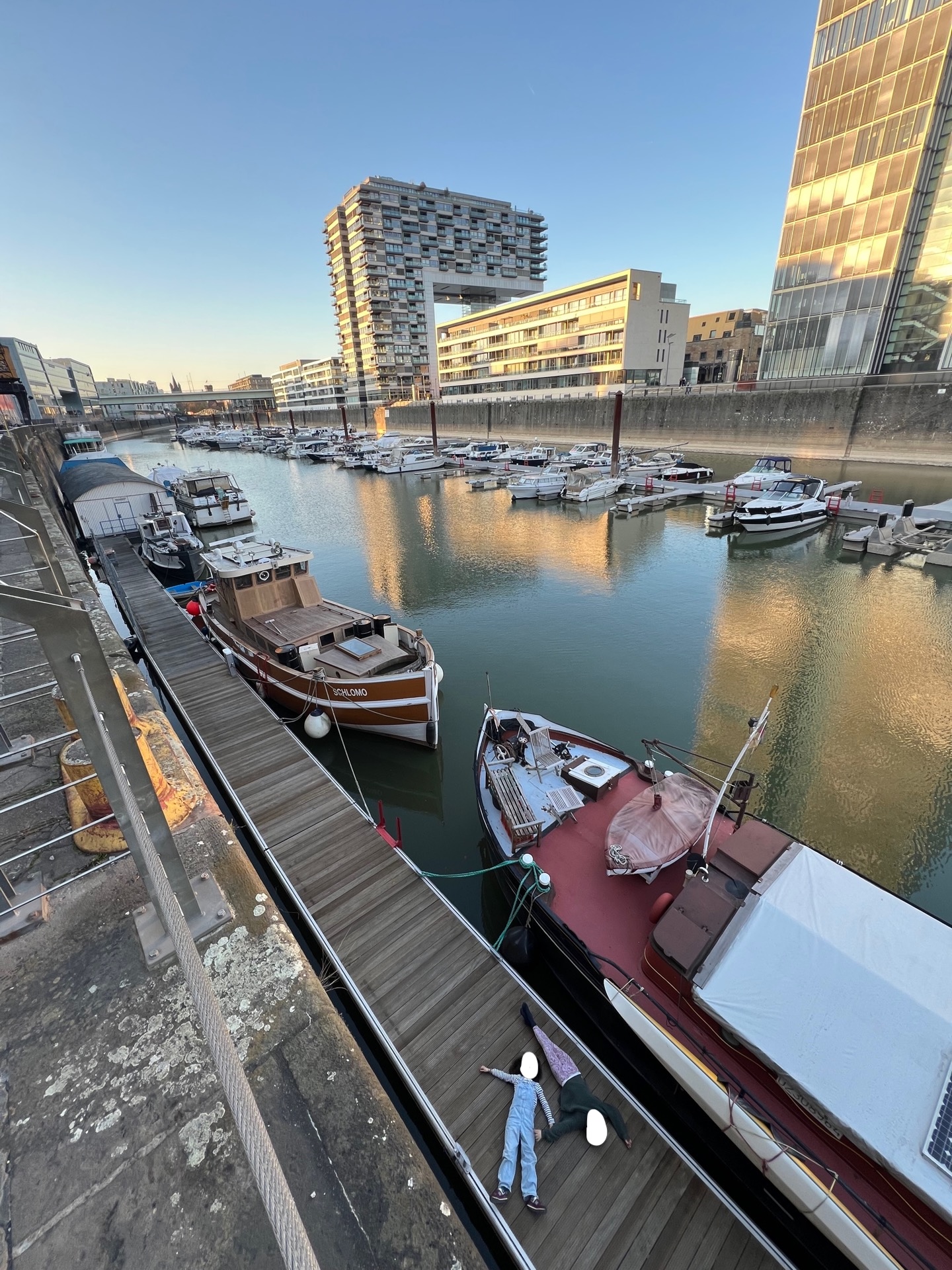
Structural survey in progress — hull, frames, engine, and fittings independently assessed
Restoration — The Standard of Investment
The restoration of Schlomo was carried out without compromise on material or execution. Over €137,000 in documented expenditure was committed across three principal areas — each chosen to the highest standard available, each fully evidenced by invoice and record.
Hull — ~€60,000 at Bültjer Bootswerft
The structural hull work was entrusted to H. Bültjer Bootswerft in Ditzum on the Ems — the same specialist yard that carried out her original conversion for NLWKN service in the 1970s. No yard in Germany was better placed to understand her construction. The hull was opened, assessed frame by frame, and rebuilt where necessary. Caulking, planking repairs, and anti-fouling treatment were carried out to commercial maritime standards. The approximately €60,000 invested here produced a structurally sound hull, confirmed by the independent survey that followed.
Electrical Systems, Solar, Lighting & Heating — ~€30,000
The entire electrical infrastructure was rebuilt from scratch. Shore power, a solar installation, a full 12V/230V dual system, and custom interior and exterior lighting were specified and installed new. This is not a patched system — it is a complete rebuild that gives the vessel the reliability and comfort expected of a modern liveaboard or charter craft. The solar installation in particular reduces mooring costs and allows independent operation without shore connection.
The heating system was replaced in full. The original open-cycle oil oven was removed and replaced with a Kabola KB 50 Ecoline — a closed-circuit marine diesel central heating unit manufactured in the Netherlands, regarded as the standard in quality marine heating. The KB 50 operates as a wet system: it heats water that circulates through the vessel via radiators and convectors, delivering consistent warmth throughout all spaces without combustion gases entering the cabin. Quiet, efficient, and purpose-built for marine use, it represents a substantial upgrade in both comfort and safety over the original installation.
Deck, Forward Renovation & Brass Hardware — €60,000+
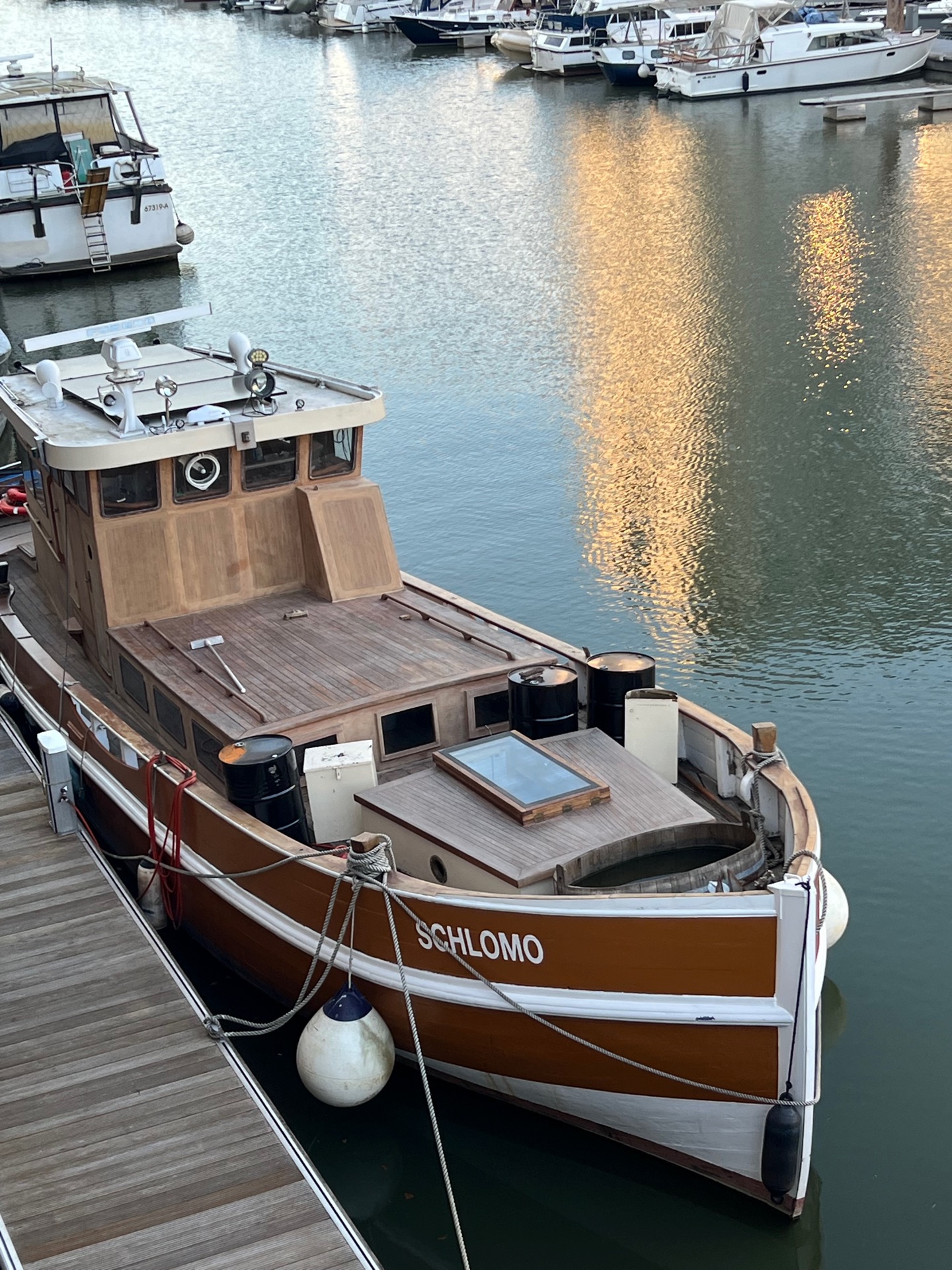
The deck and forward areas received the most visible — and the most uncompromising — investment. The forward decking was relaid in certified Burma teak: one of the most prized marine hardwoods in the world, chosen for its exceptional durability, natural oils that resist water and rot, dimensional stability under sun and rain, and the warmth of its grain. It is the material of classic yachts and traditional working craft; it does not age poorly.
Hardware throughout was specified to match. Fittings, cleats, ventilators, and deck furniture were sourced from Foresti & Suardi — the Italian manufacturer whose solid brass and bronze marine hardware has been the standard for classic vessels and superyachts since 1909. There is no direct equivalent in terms of weight, finish, and longevity. Each piece was imported and fitted individually. The result is a deck that reads immediately as something built with care — not assembled from catalogues.
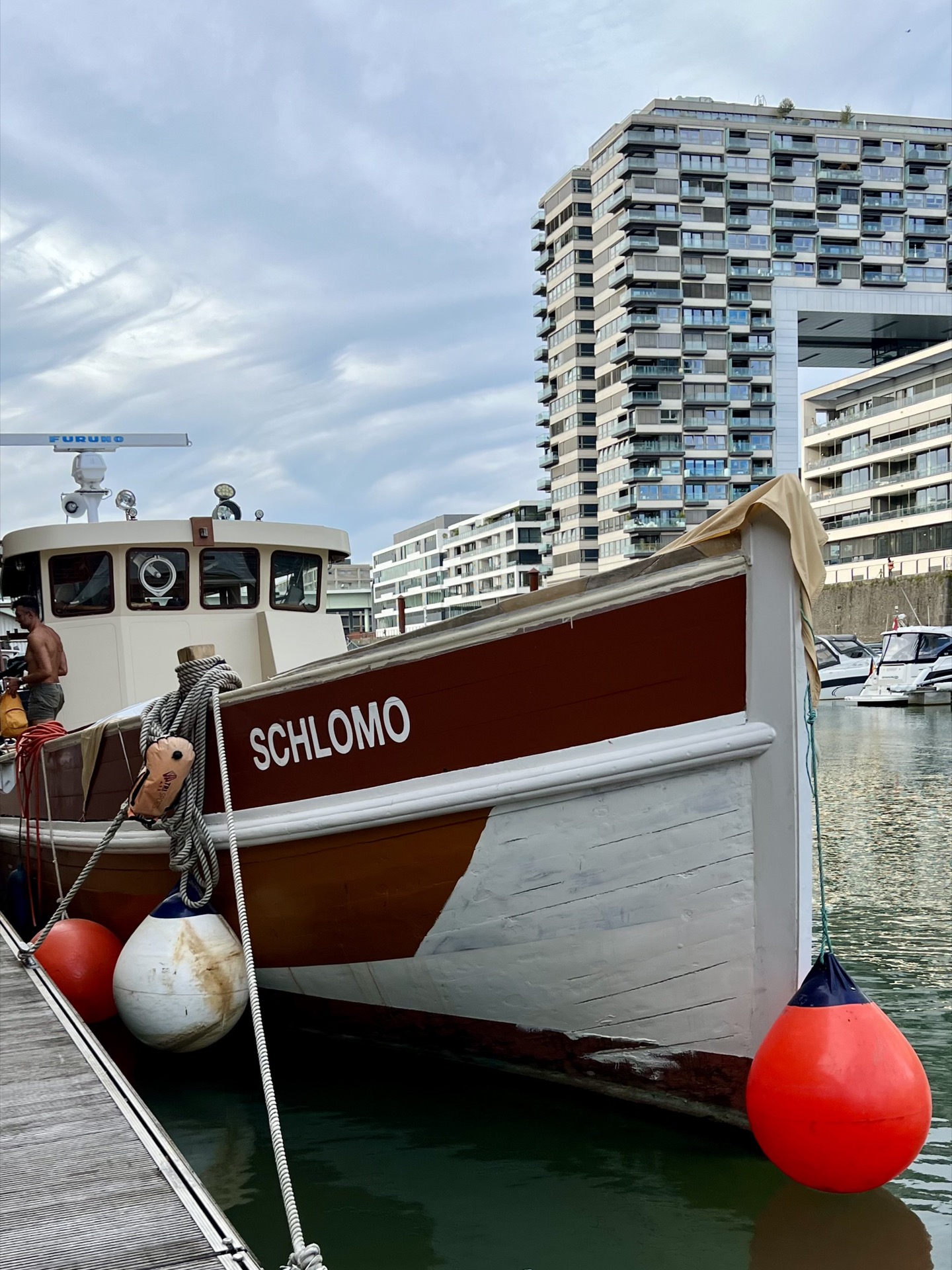
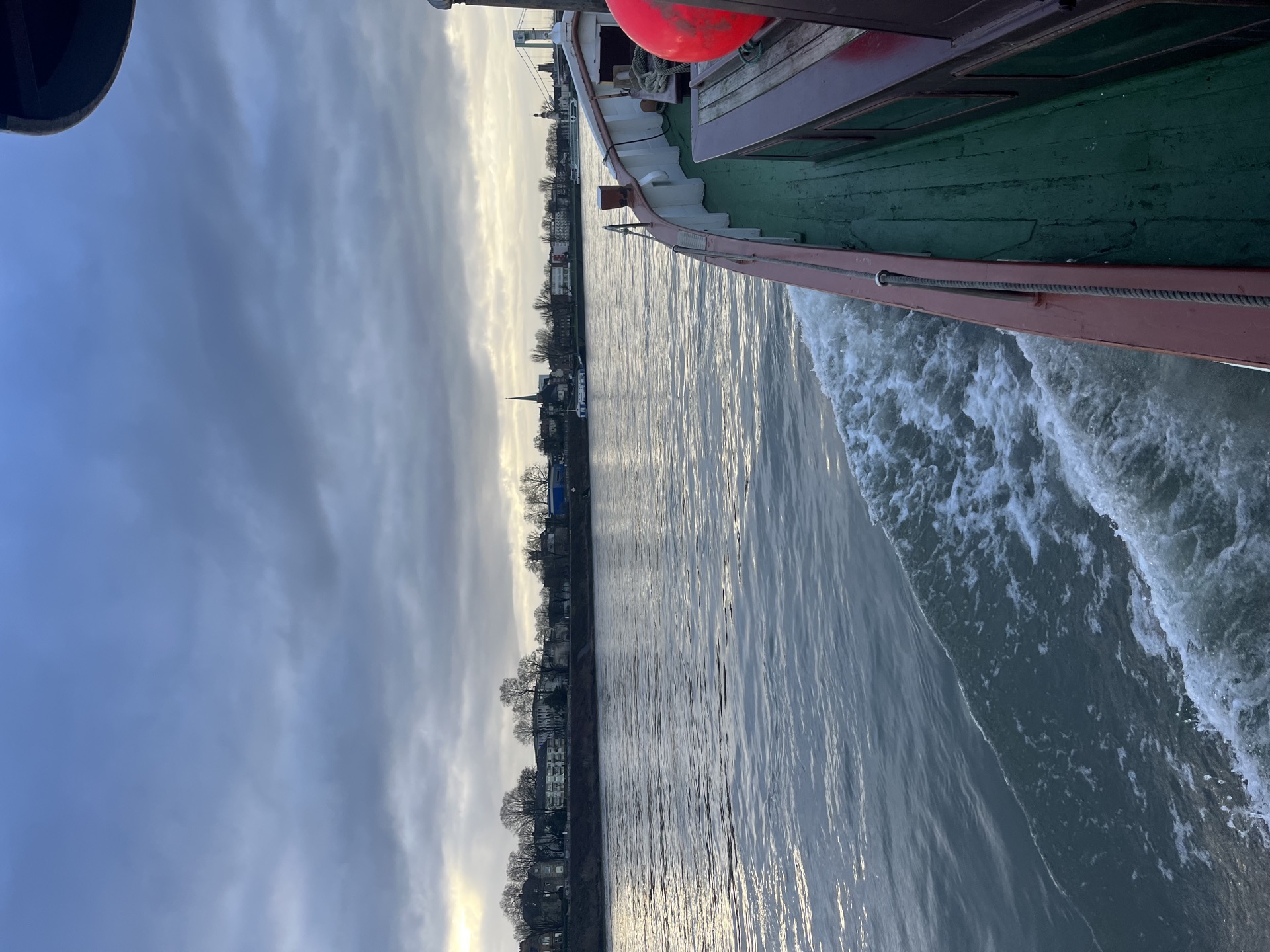
The standard of finish that runs throughout — Burma teak, solid brass, and structural work done once, done right
Every euro of investment across all three areas is documented. Every invoice is retained and available. The restoration is not an estimate — it is a record. The Fahrtauglichkeitsbescheinigung (§5 Abs. 1 Nr. 2, Binnenschifffahrt-Sportboot-Vermietungsverordnung, 01.05.2025) was issued following inspection of the completed vessel — formal confirmation that the restoration met the required standard.
What You Acquire — Specification & Documentation
Schlomo is offered with a complete documentation package: the independent appraisal (G26-284), the original Schiffsmessbrief (ship measurement certificate), the Bau- und Ausrüstungs-Sicherheitszeugnis (Ship Safety Construction and Equipment Certificate, previously valid under NLWKN service), the commercial rental acceptance protocol, and full restoration records.
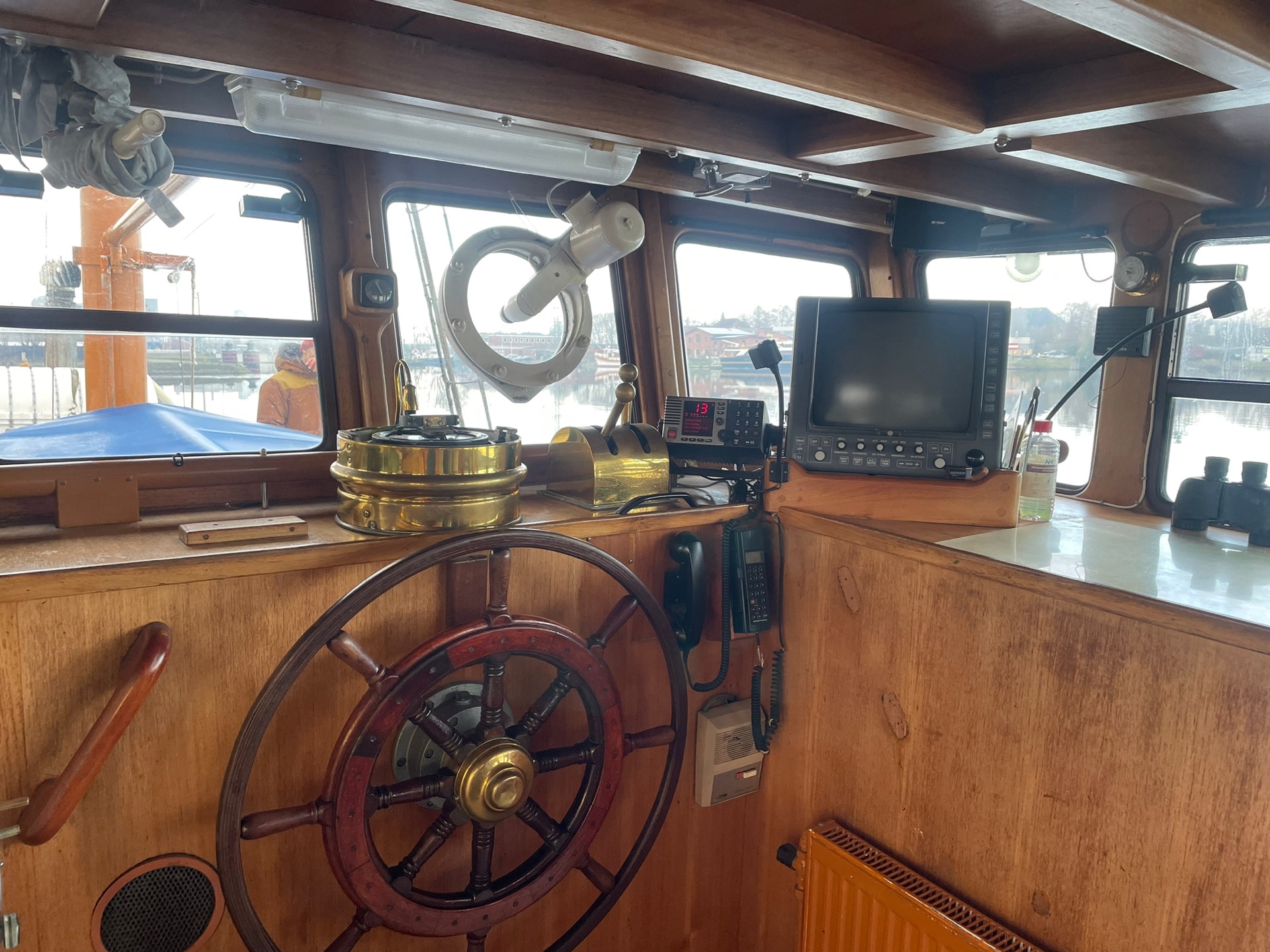
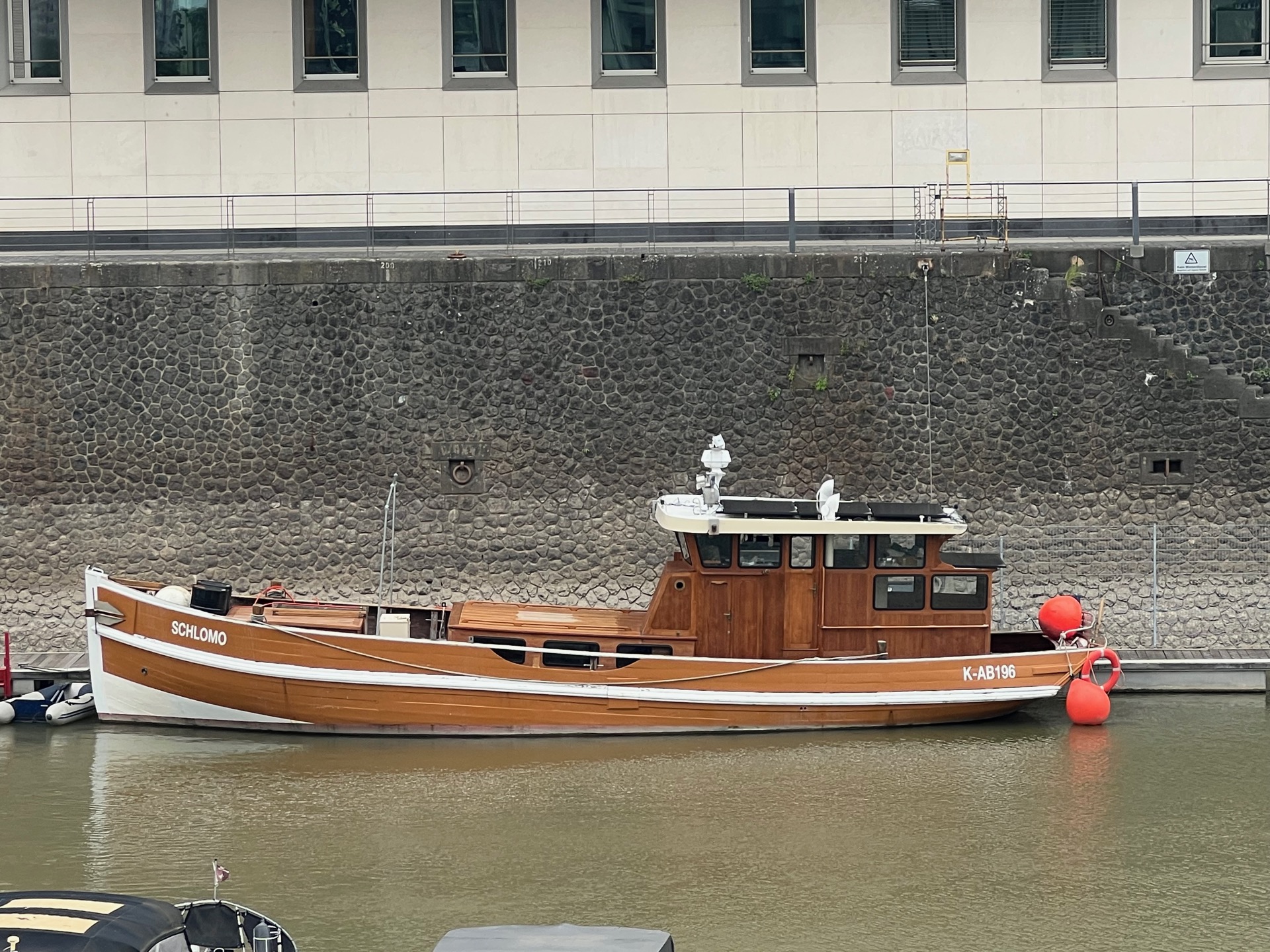
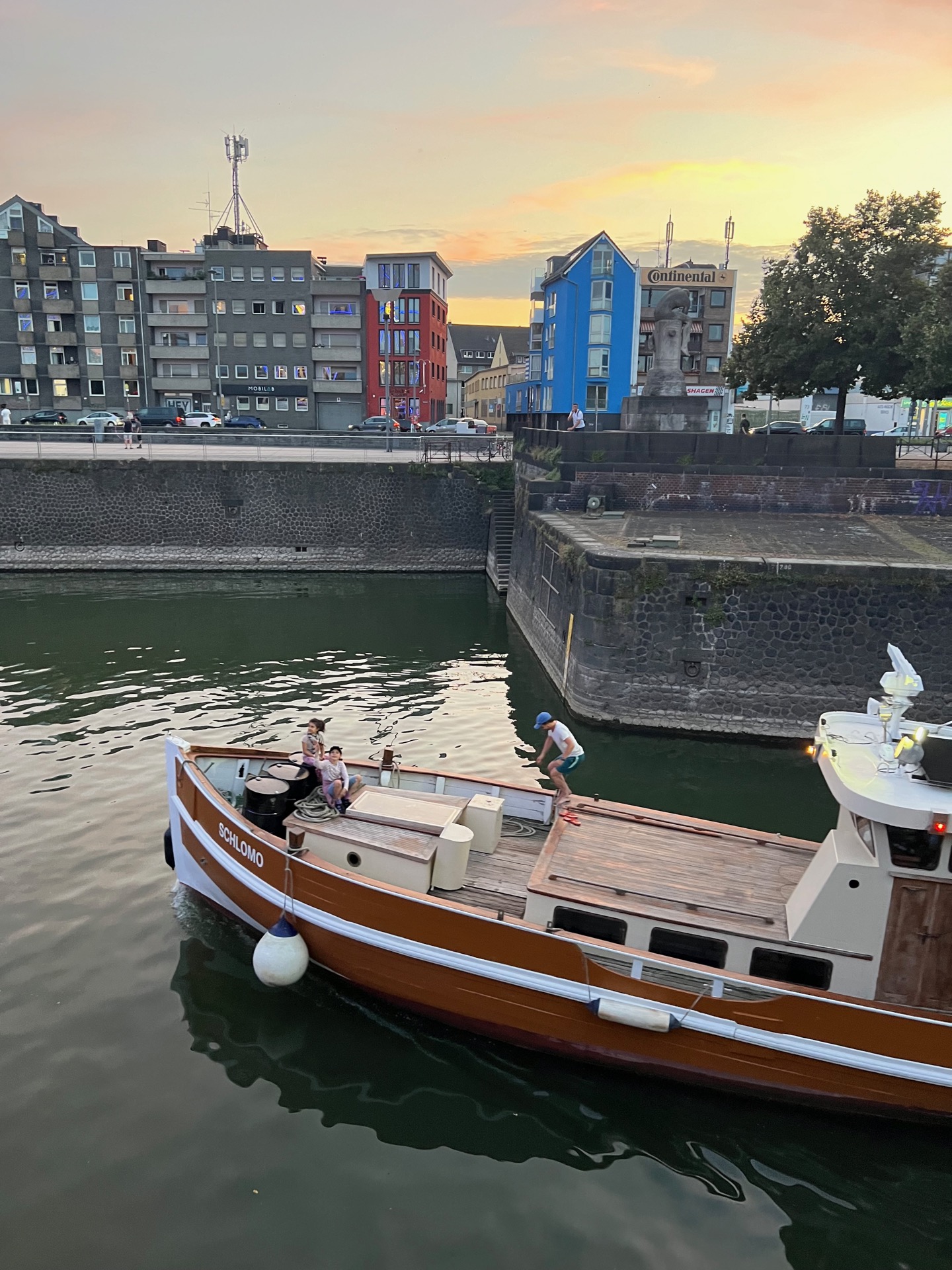
On deck she carries a main mast with cargo boom and two deck winches, a stern A-frame with winch, and a motorised workboat. Below, the bridge is fitted with magnetic compass, GPS, echo sounder, chart plotter, and radar; the radio suite includes two VHF sets and AIS. Accommodation comprises a mess and salon with four integrated berths, a galley, and WC. Fuel capacity is 1,400 litres across two tanks; fresh water 300 litres.
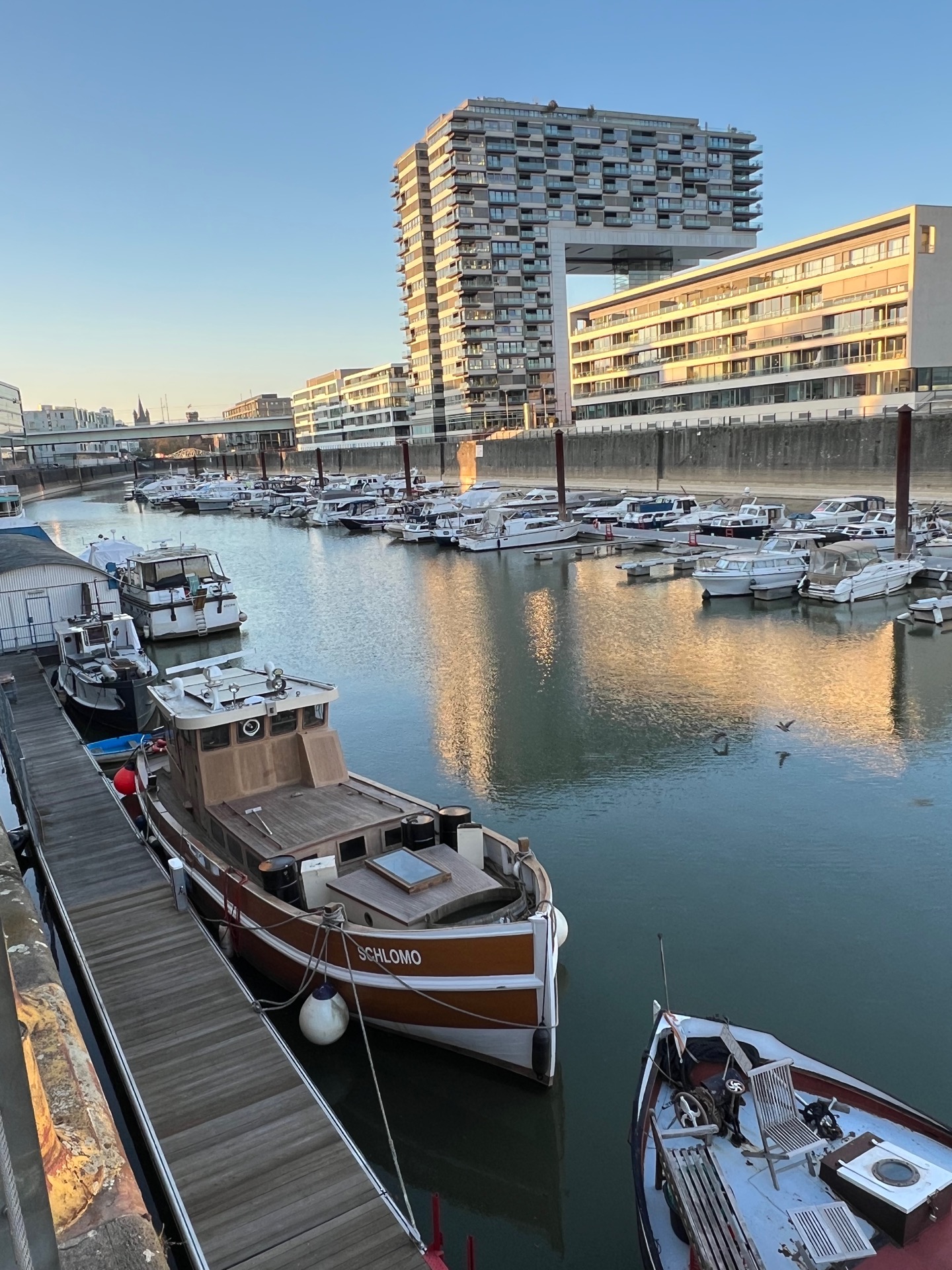
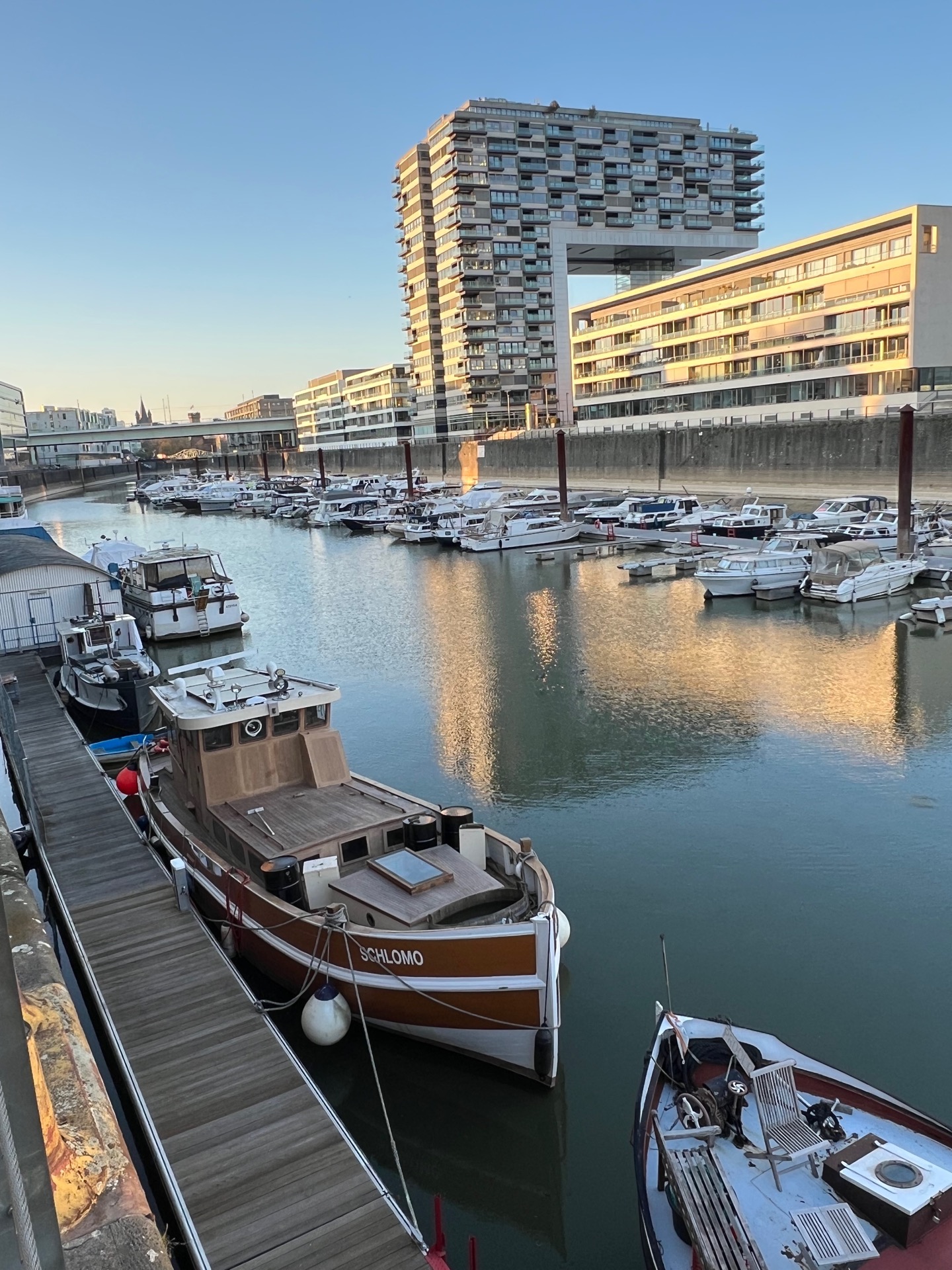
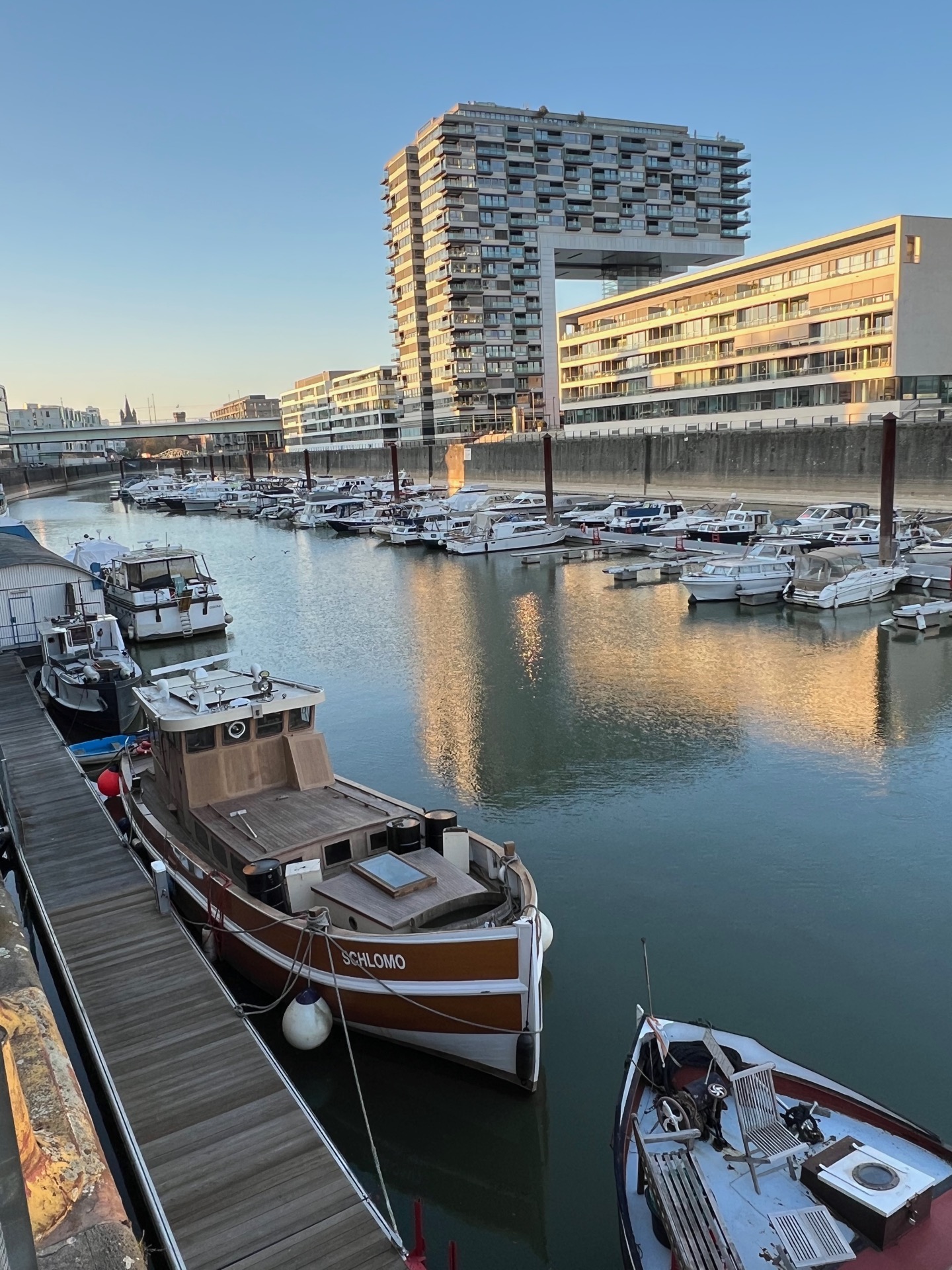
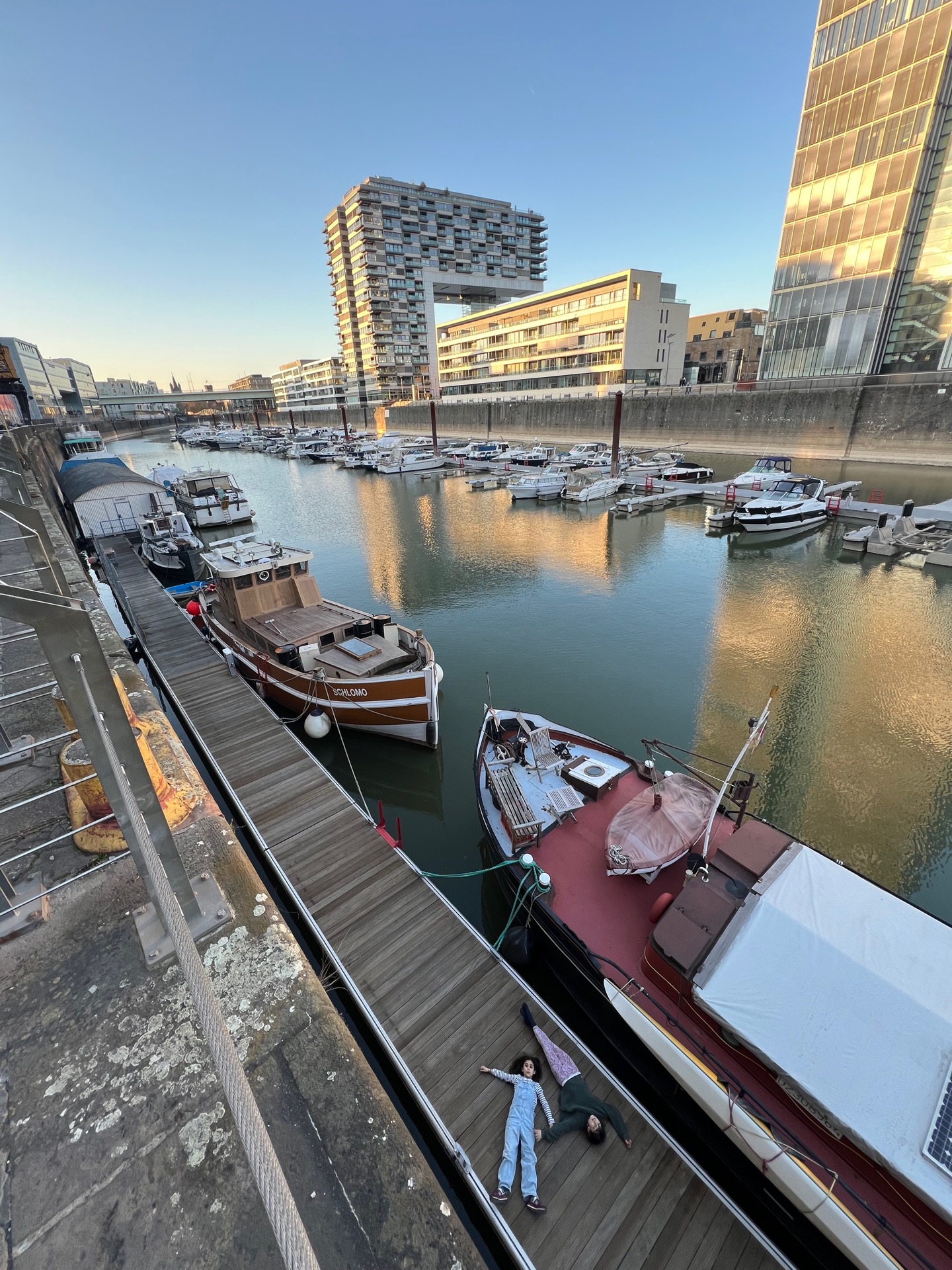
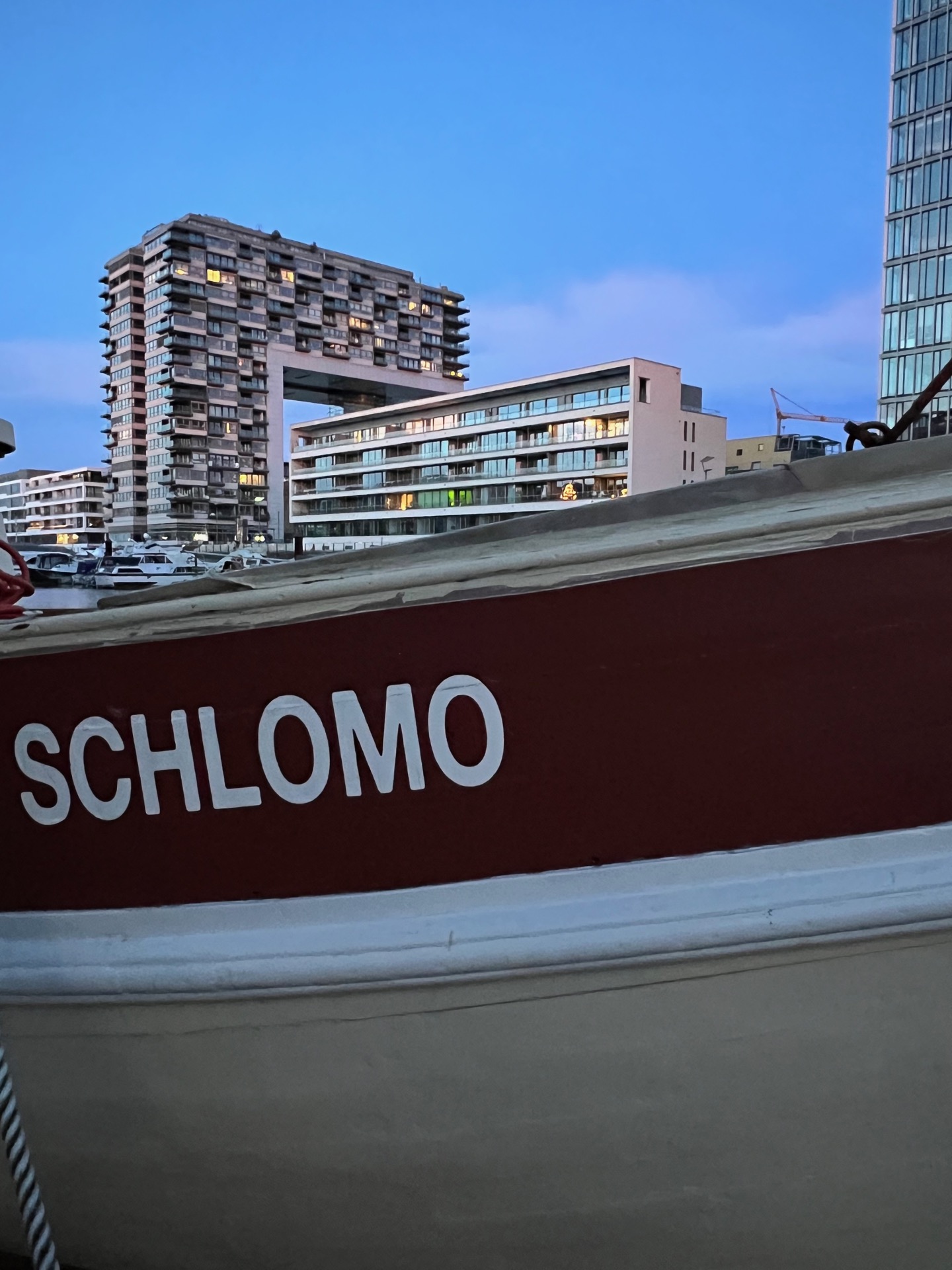
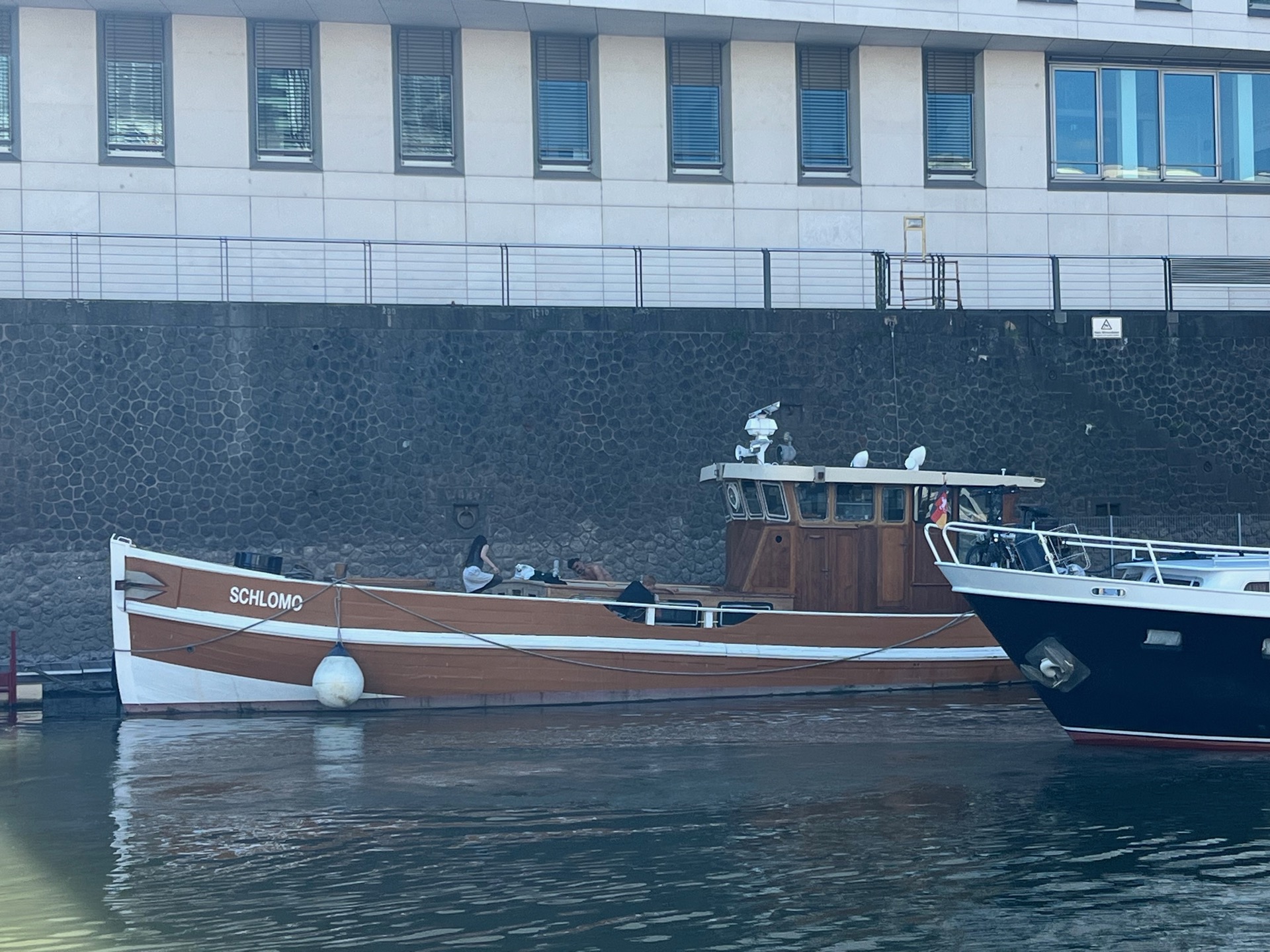
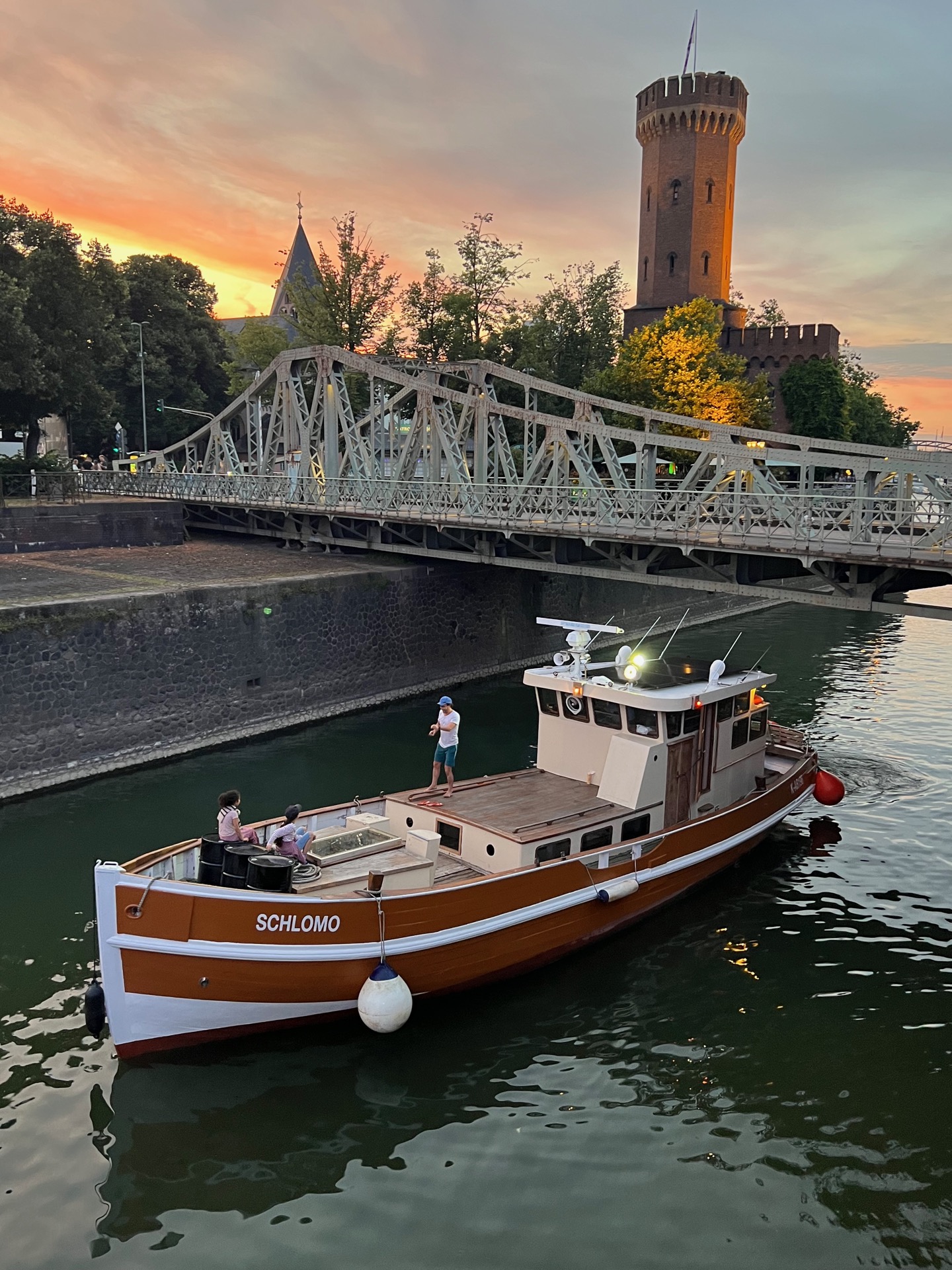
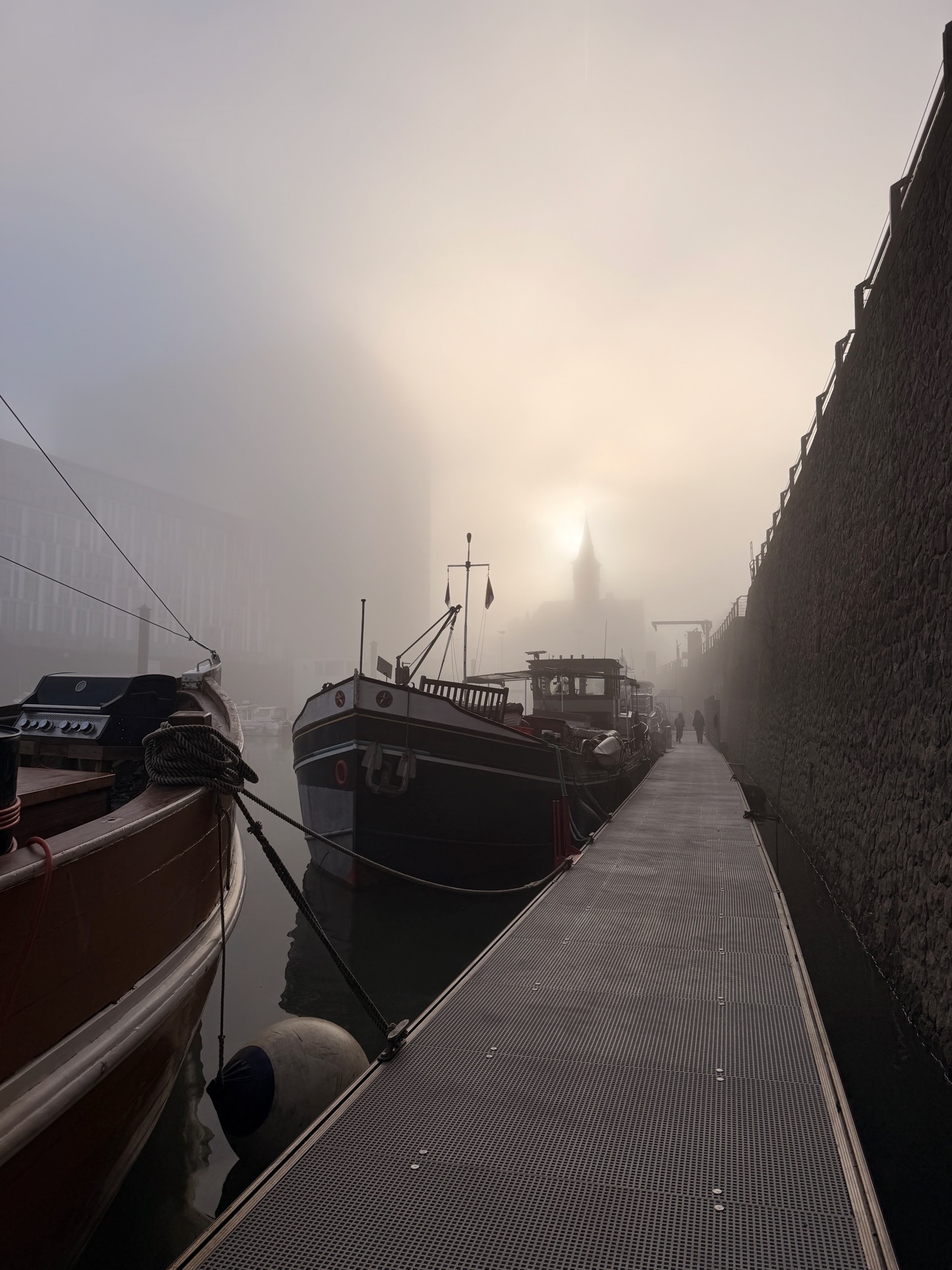
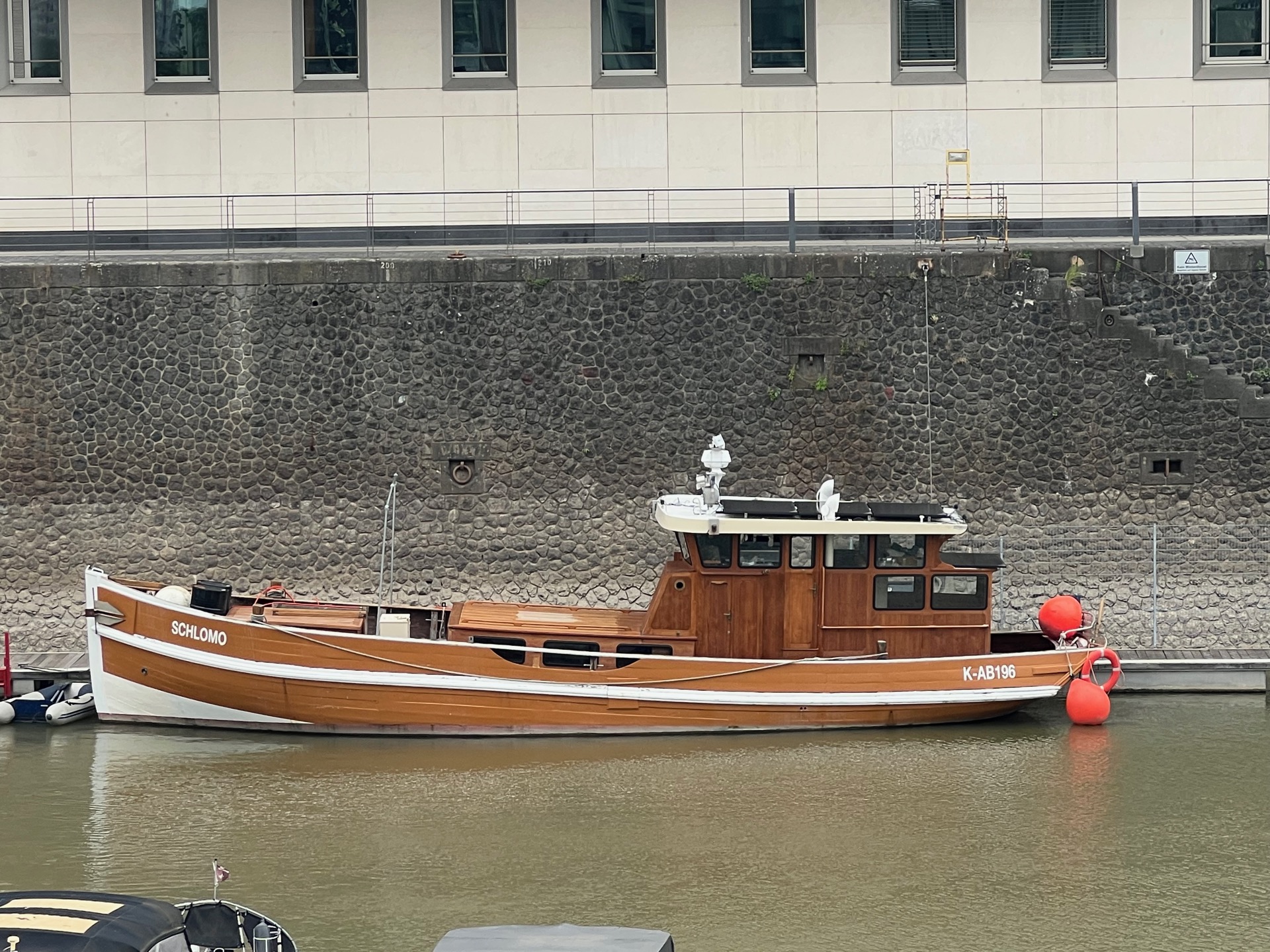
She is moored in Cologne's Rheinauhafen and available for inspection by appointment. The conversation begins with the appraisal and ends wherever you wish to take her.
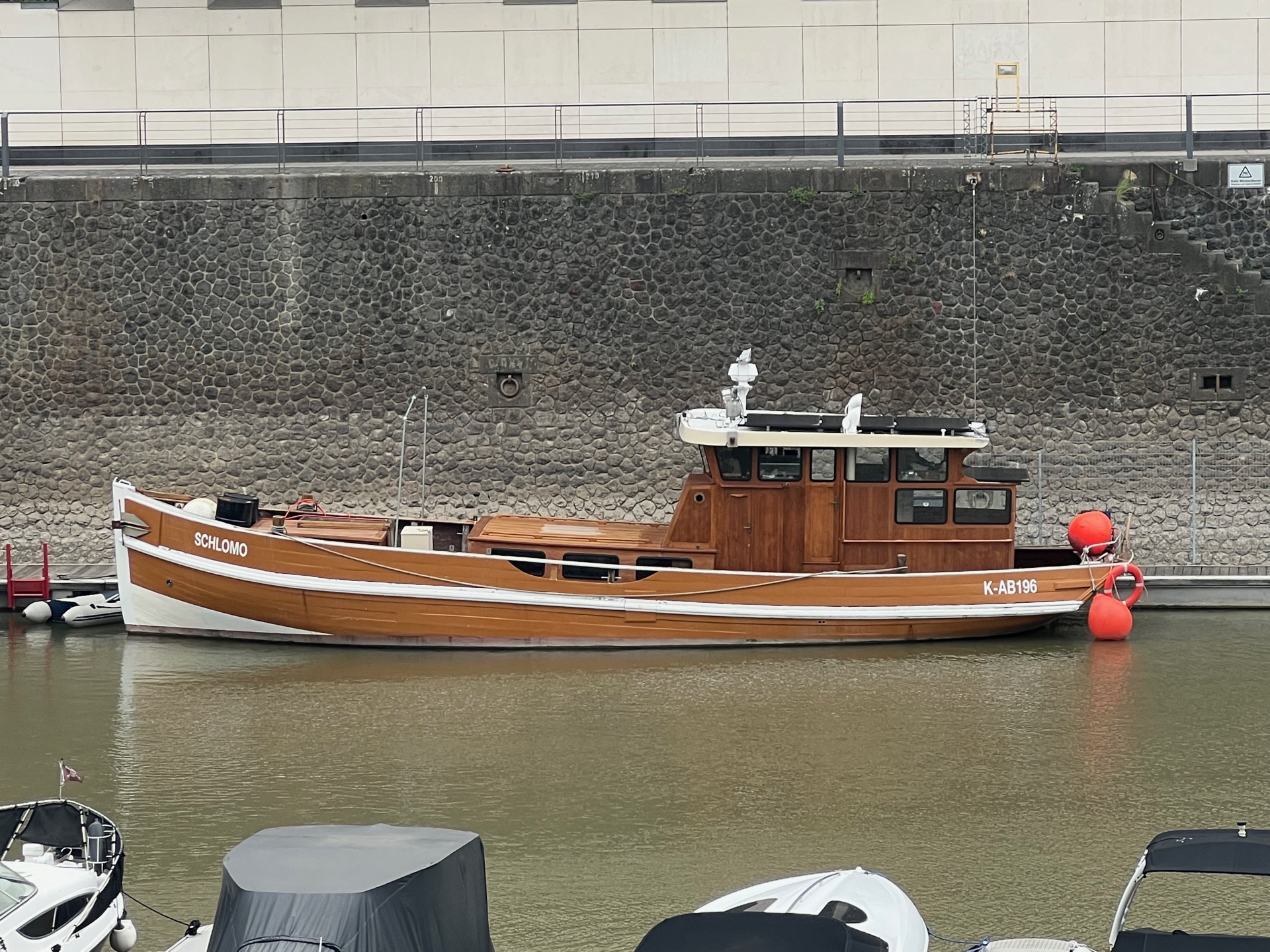
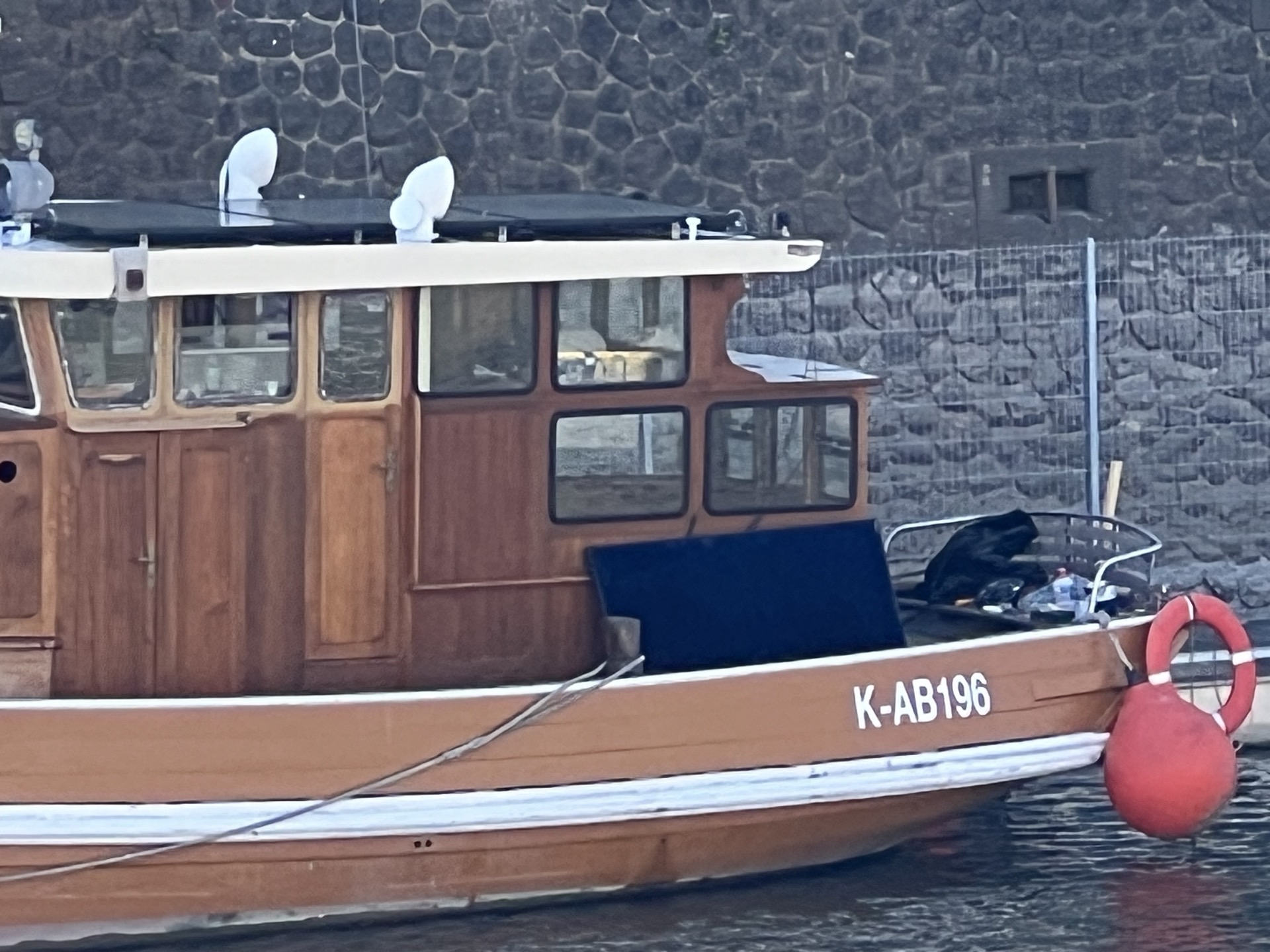
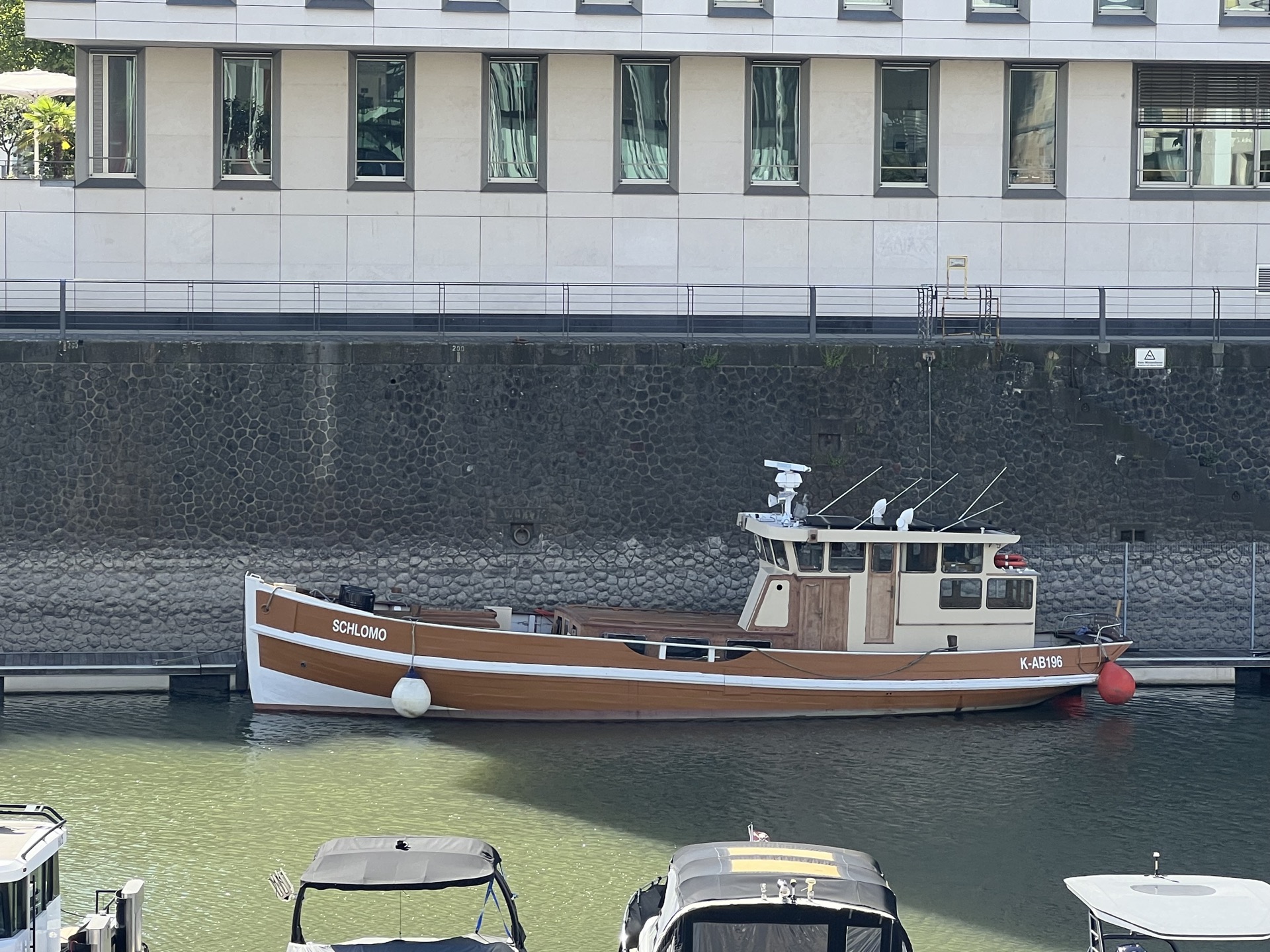
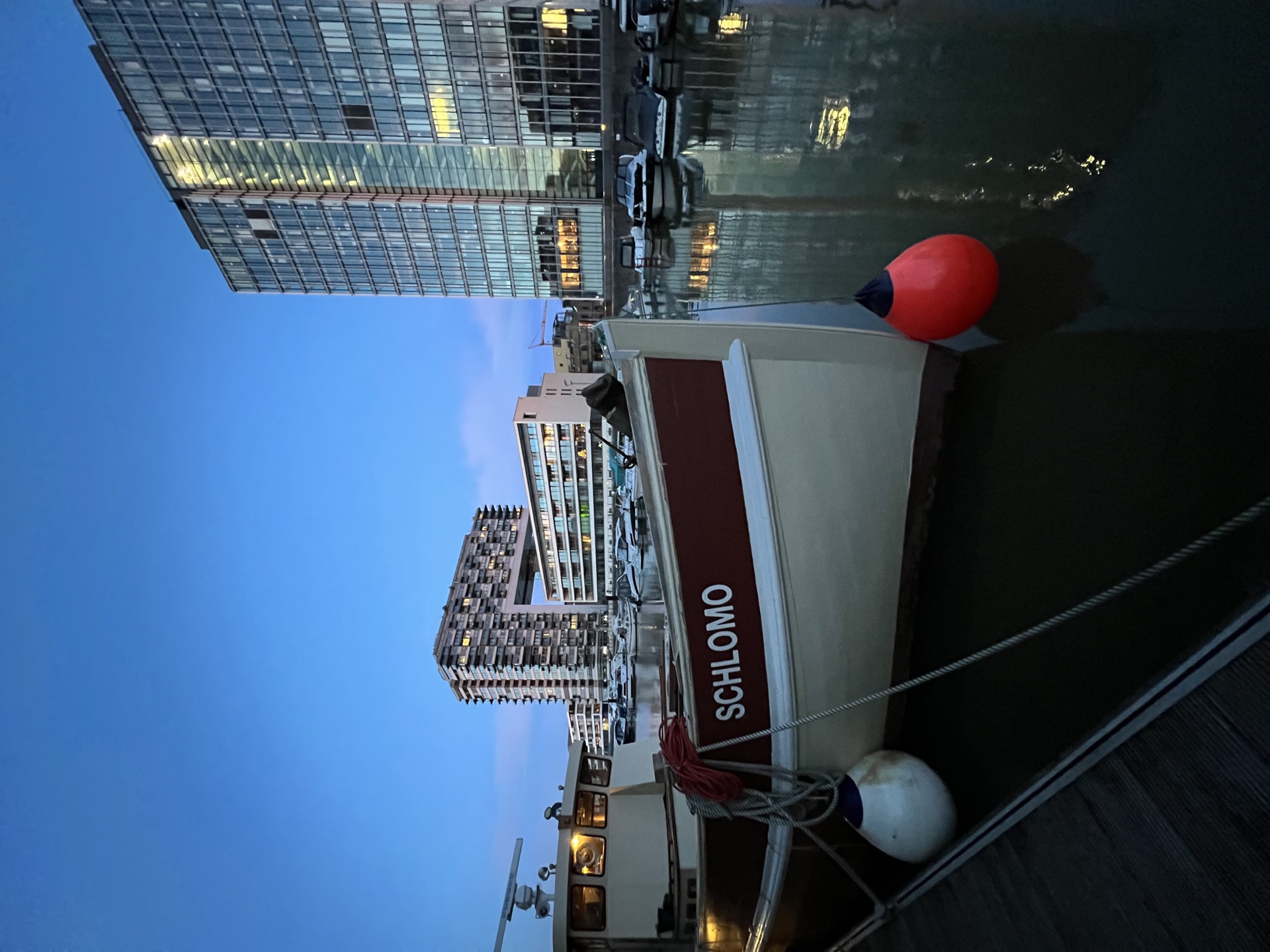
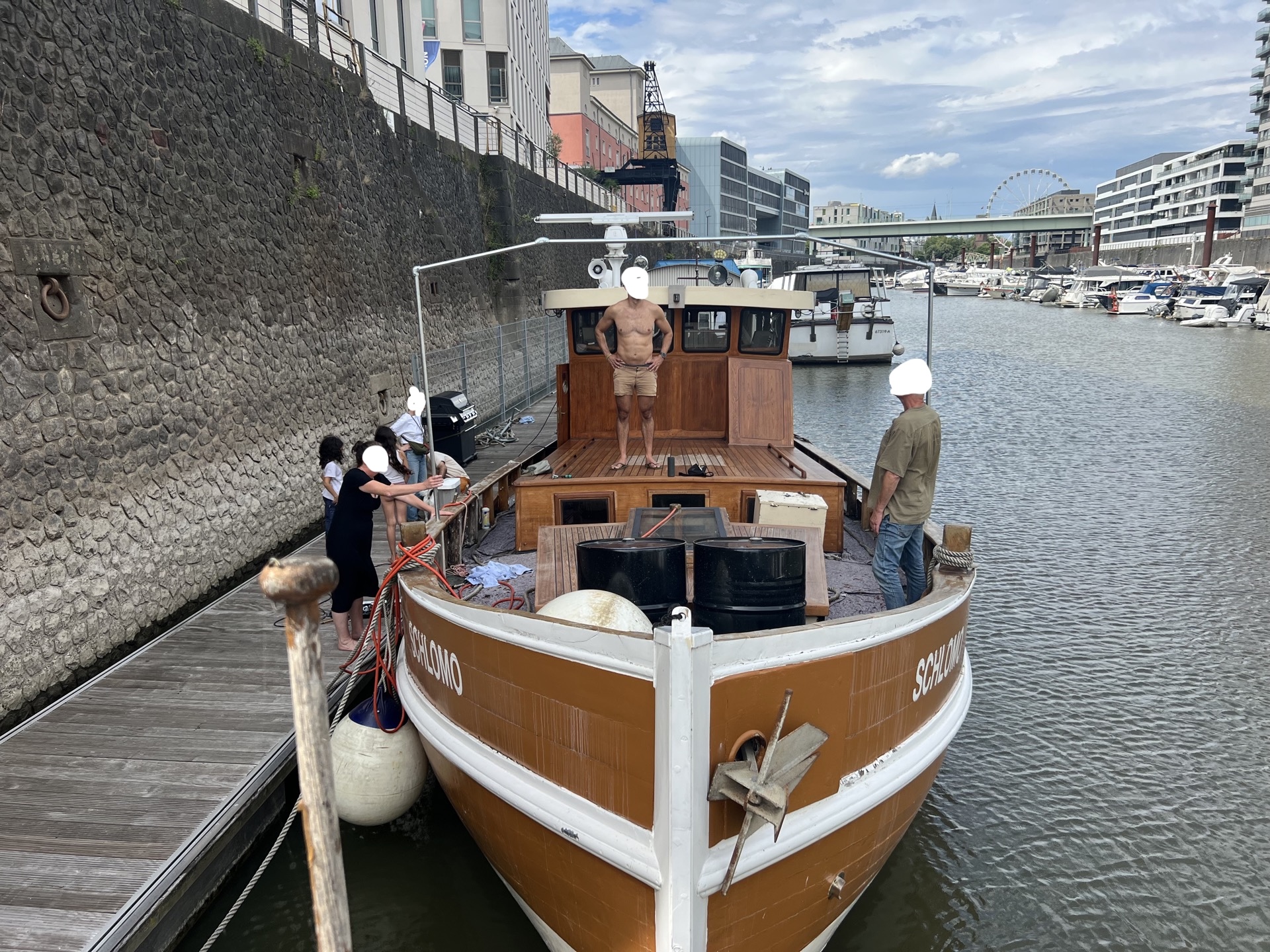
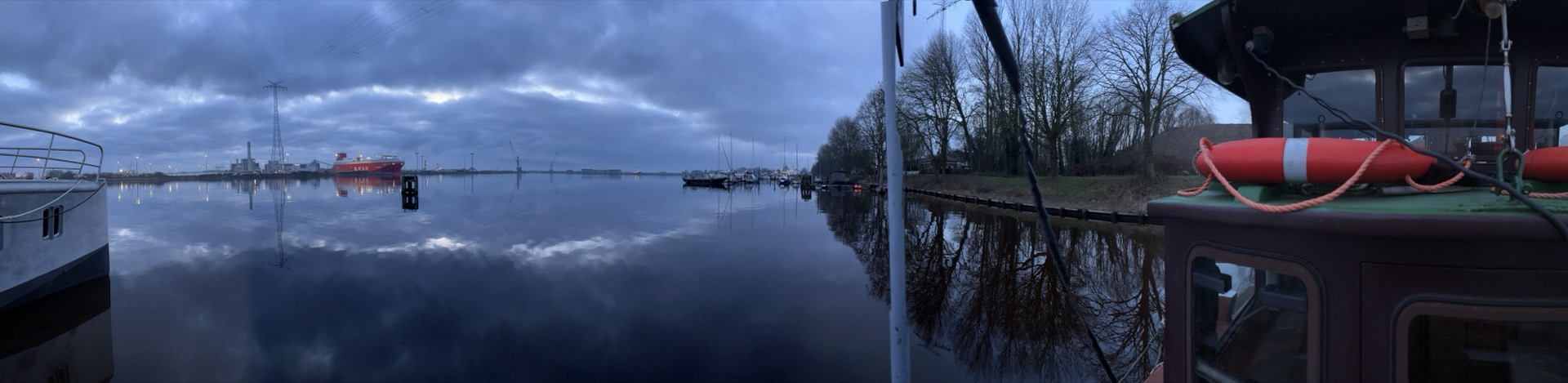
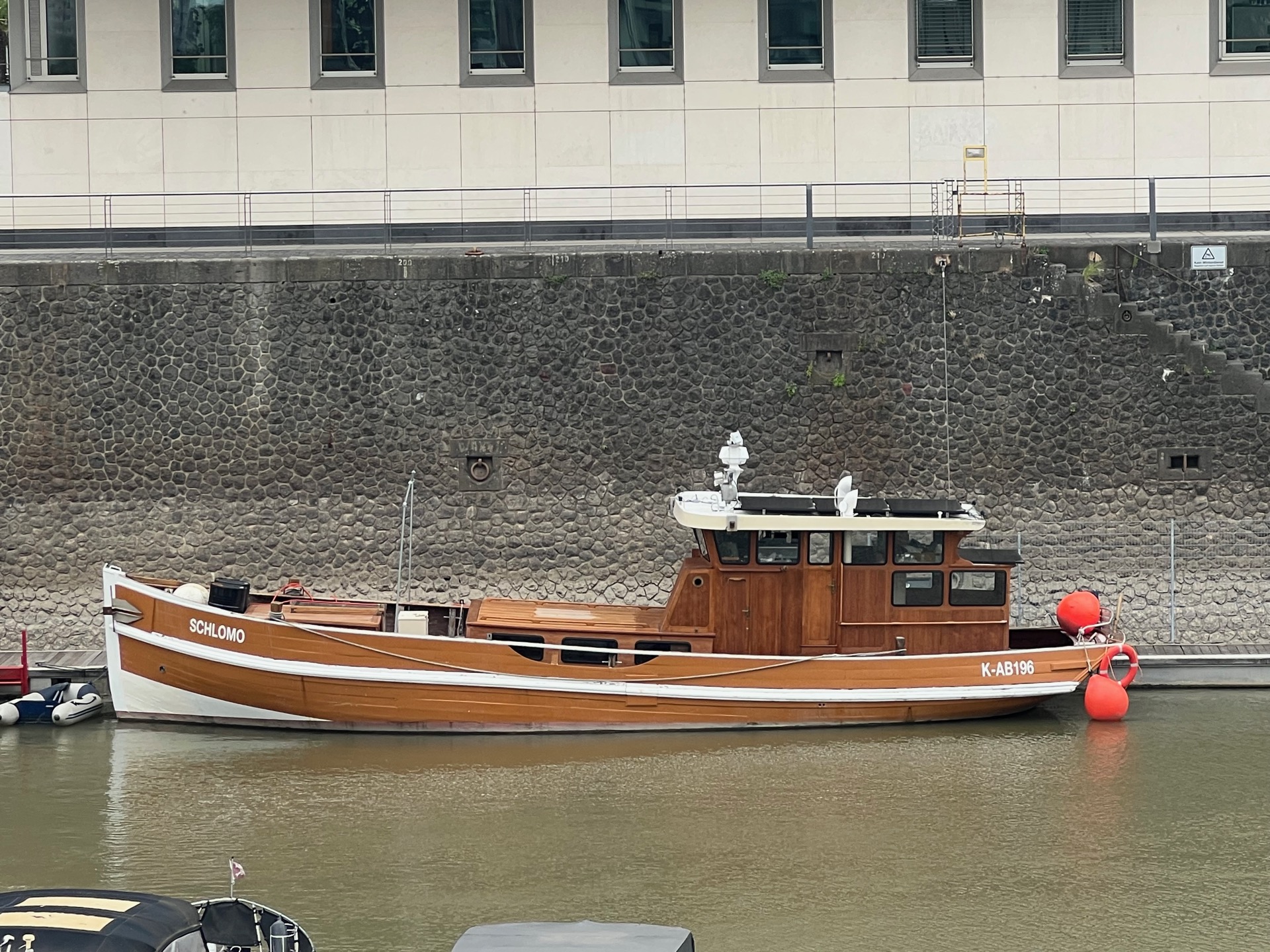
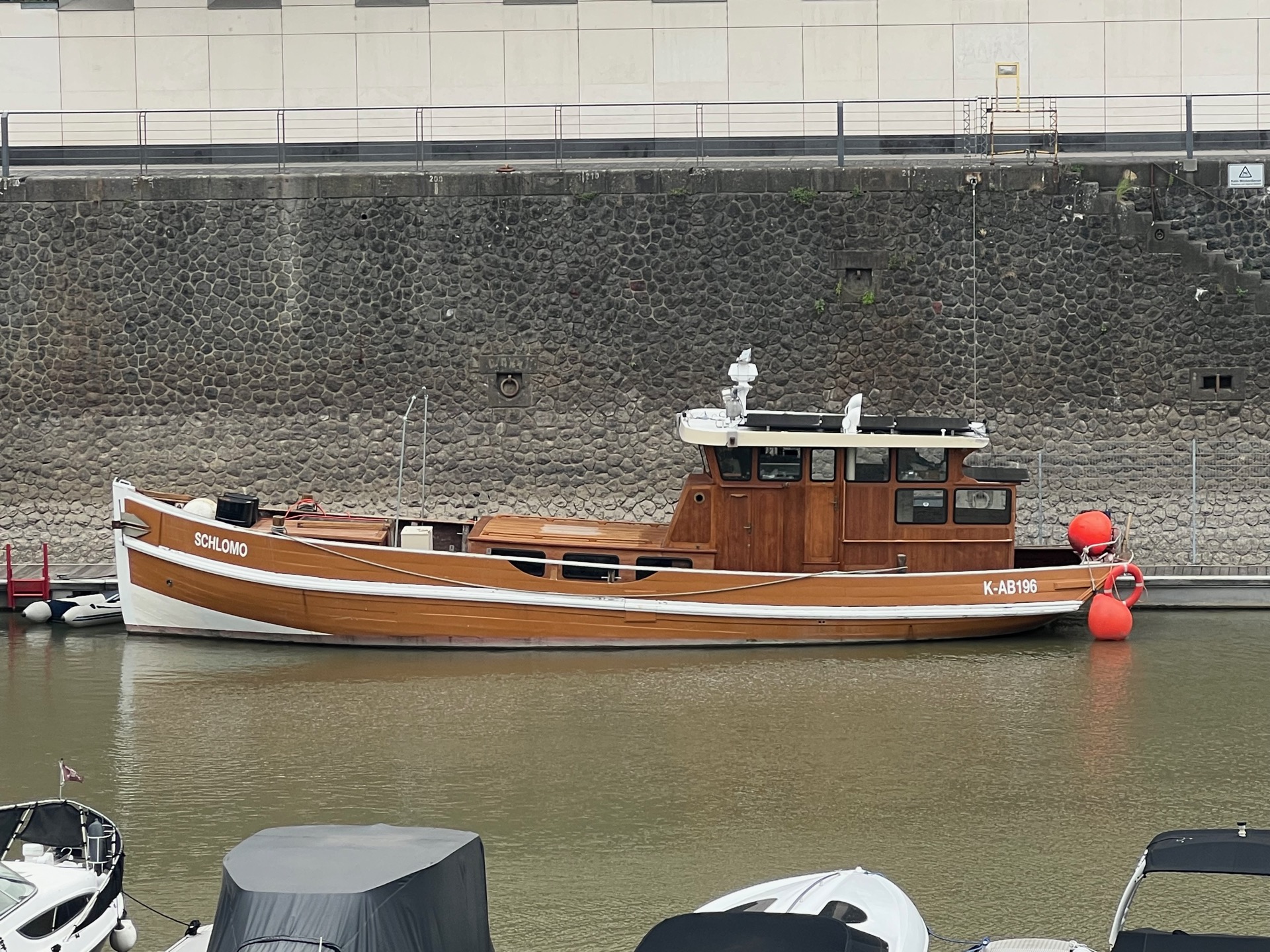
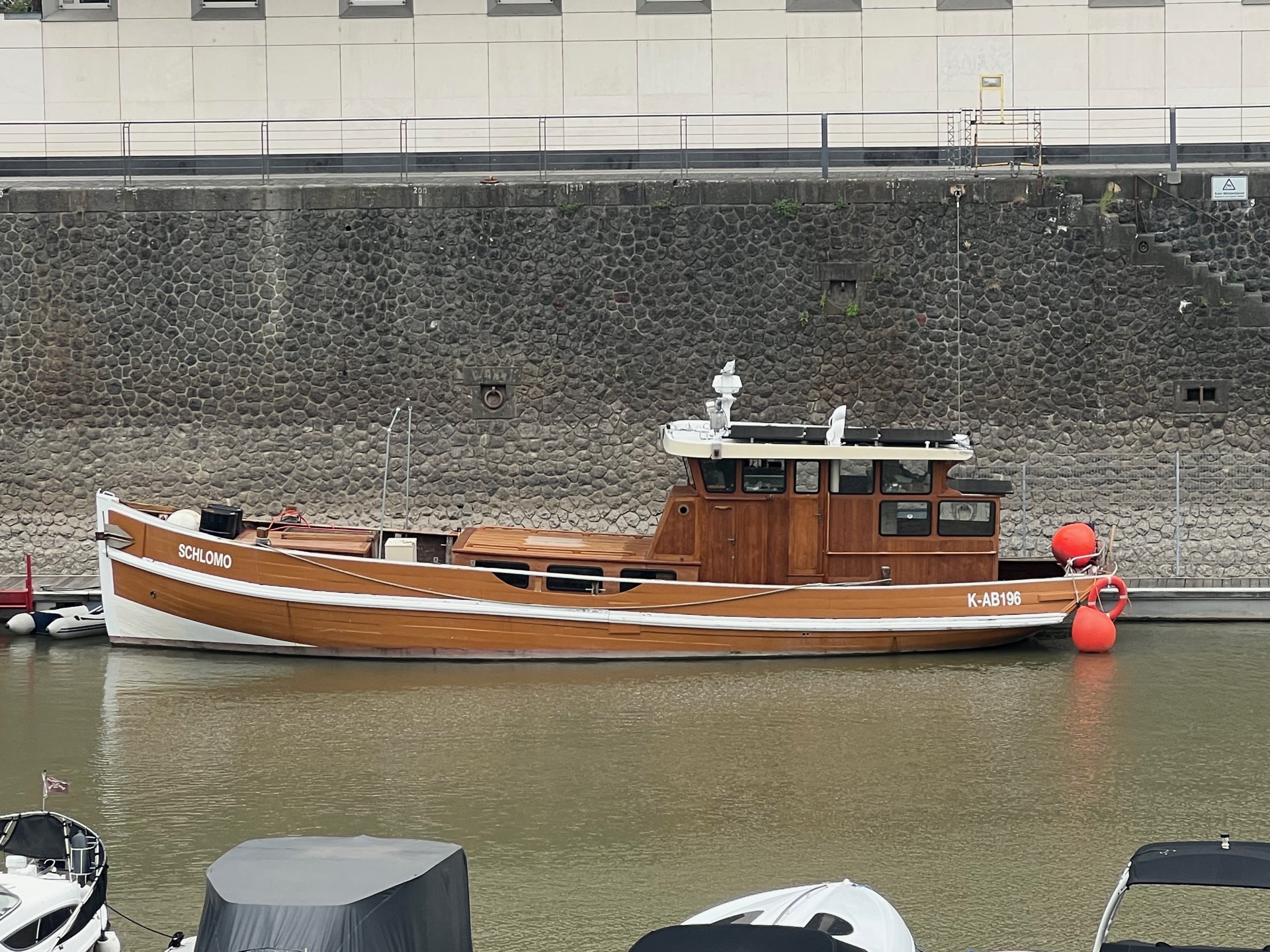
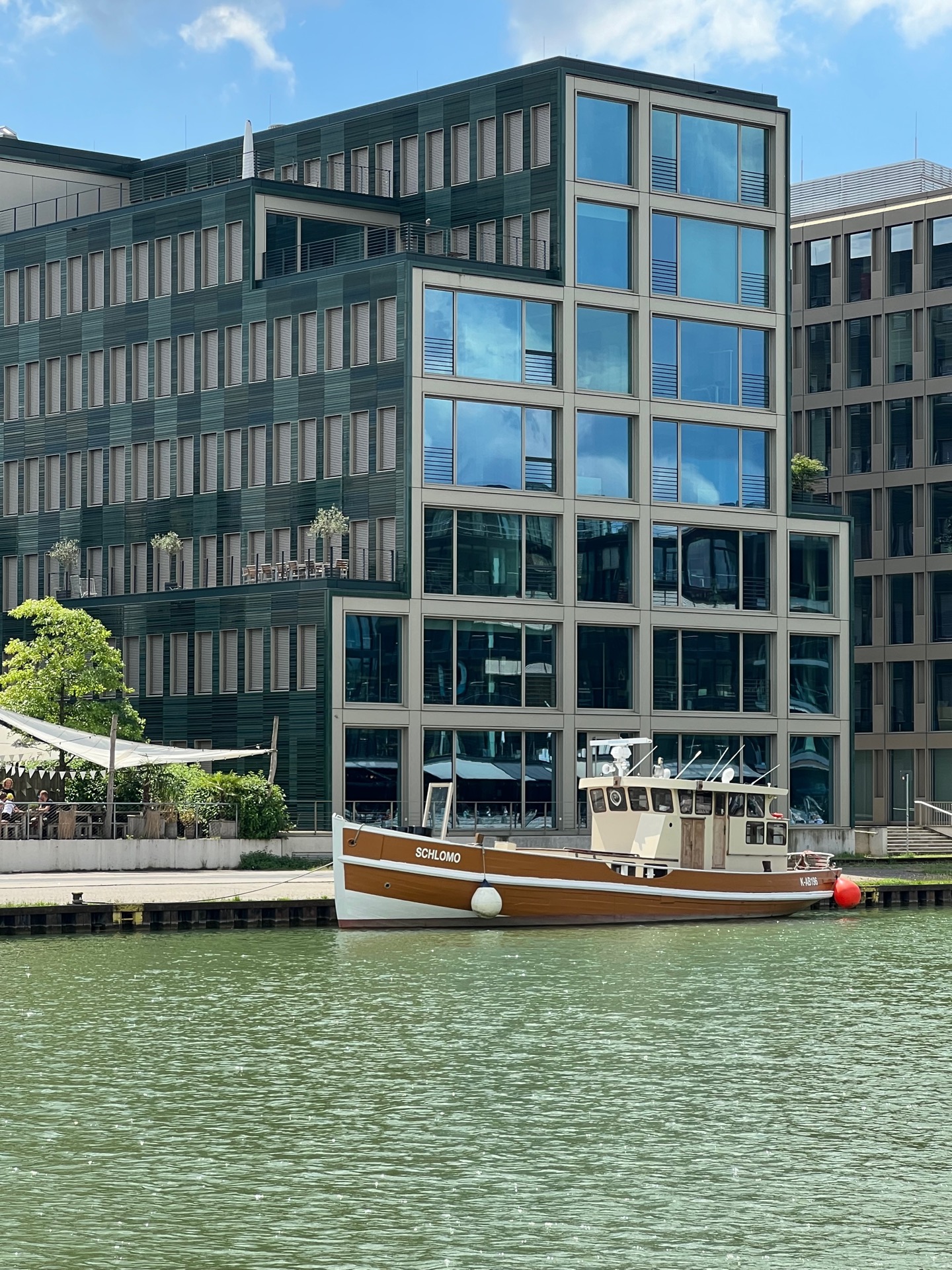
Schlomo moored at Rheinauhafen, Cologne — documented, appraised, and for sale